The End Time Church: from the Cathedrals to the Catacombs
By Dan L. White
Copyright ©2016 by Dan L. White, all rights reserved.
Scripture quotations are from the World English Bible (WEB) which is in the public domain.
Chapter 14
Solomon, the Tired Tyrant
He started so high. He fell so far.
He was the wisest man in the world, yet he overtaxed his people to pay for his own excesses; he turned the Mount of Olives into a pagan shrine; and like Saul, he tried to murder the man who would replace him.
That was Solomon, the tyrant.
Beethoven tore the title page off his third symphony when he found out that his hero Napoleon was a tyrant.
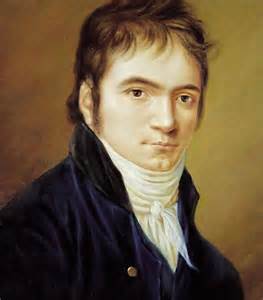
Portrait of Ludwig van Beethoven (1803), Horneman
“In 1803 Beethoven composed his third symphony (now known as the Sinfonia Eroica [Hero Symphony]) in Heiligenstadt, a village about one and a half hours from Vienna….In writing this symphony Beethoven had been thinking of Buonaparte, but Buonaparte while he was First Consul. At that time Beethoven had the highest esteem for him and compared him to the greatest consuls of ancient Rome. Not only I, but many of Beethoven¹s closer friends, saw this symphony on his table, beautifully copied in manuscript, with the word “Buonaparte” inscribed at the very top of the title-page and “Luigi van Beethoven” at the very bottom. Whether or how the intervening gap was to be filled out I do not know. I was the first to tell him the news that Buonaparte had declared himself Emperor, whereupon he broke into a rage and exclaimed, “So he is no more than a common mortal! Now, he too will tread under foot all the rights of man, indulge only his ambition; now he will think himself superior to all men, become a tyrant!” Beethoven went to the table, seized the top of the title-page, tore it in half and threw it on the floor. The page was later re-copied and it was only now that the symphony received the title ‘Sinfonia Eroica.’” From Biographische Notizen über Beethoven, F. Wegeler and F. Ries, 1838.
Napoleon began his rise to power as part of the French Republic, with government supposedly vested in representatives of the people, and wound up crowning himself as lifetime emperor. Like so many others, Napoleon became a tyrant and the title of the third symphony was ripped apart.
And so was Solomon.
Solomon, a son of David by Bathsheba, had a great start.
1 Kings 3:5
(5) In Gibeon, Yahweh appeared to Solomon in a dream by night; and God said, “Ask for what I should give you.”
In that dream, this is what Solomon answered.
1 Kings 3:7-14
(7) Now, Yahweh my God, you have made your servant king instead of David my father. I am just a little child. I don’t know how to go out or come in.
(8) Your servant is among your people which you have chosen, a great people, that can’t be numbered or counted for multitude.
(9) Give your servant therefore an understanding heart to judge your people, that I may discern between good and evil; for who is able to judge this great people of yours?”
Instead of seeking something for himself, Solomon asked for wisdom so that, as king, he could serve the people.
(10) This request pleased the Lord, that Solomon had asked this thing.
(11) God said to him, “Because you have asked this thing, and have not asked for yourself long life, nor have you asked for riches for yourself, nor have you asked for the life of your enemies, but have asked for yourself understanding to discern justice;
(12) behold, I have done according to your word. Behold, I have given you a wise and understanding heart; so that there has been no one like you before you, and after you none will arise like you.
(13) I have also given you that which you have not asked, both riches and honor, so that there will not be any among the kings like you for all your days.
(14) If you will walk in my ways, to keep my statutes and my commandments, as your father David walked, then I will lengthen your days.”
God granted Solomon wisdom, more than any man on earth at that time.
1 Kings 10:23-24
(23) So king Solomon exceeded all the kings of the earth in riches and in wisdom.
(24) All the earth sought the presence of Solomon, to hear his wisdom, which God had put in his heart.
The kingdom was blessed by that wisdom.
1 Kings 4:20
(20) Judah and Israel were numerous as the sand which is by the sea in multitude, eating and drinking and making merry.
(25) Judah and Israel lived safely, every man under his vine and under his fig tree, from Dan even to Beersheba, all the days of Solomon.
Solomon was the king on Yahweh’s throne. Nevertheless Solomon brought unity, for a while.
1Ch 29:23
Then Solomon sat on the throne of Yahweh as king instead of David his father, and prospered; and all Israel obeyed him.
Again it appeared that Israel had made the right decision in trading God’s leadership for that of a human leader, who was the wisest man on earth. But there was a problem.
Solomon was human.
Uh-oh.
In the book that he wrote, Solomon spoke of his wisdom.
Ecclesiastes 1:16
(16) I said to myself, “Behold, I have obtained for myself great wisdom above all who were before me in Jerusalem. Yes, my heart has had great experience of wisdom and knowledge.”
Then Solomon wrote of how he did not deny himself.
Ecclesiastes 2:1-10
(1) I said in my heart, “Come now, I will test you with mirth: therefore enjoy pleasure;” and behold, this also was vanity.
(2) I said of laughter, “It is foolishness;” and of mirth, “What does it accomplish?”
(3) I searched in my heart how to cheer my flesh with wine, my heart yet guiding me with wisdom, and how to lay hold of folly, until I might see what it was good for the sons of men that they should do under heaven all the days of their lives.
(4) I made myself great works. I built myself houses. I planted myself vineyards.
(5) I made myself gardens and parks, and I planted trees in them of all kinds of fruit.
(6) I made myself pools of water, to water from it the forest where trees were reared.
(7) I bought male servants and female servants, and had servants born in my house. I also had great possessions of herds and flocks, above all who were before me in Jerusalem;
(8) I also gathered silver and gold for myself, and the treasure of kings and of the provinces. I got myself male and female singers, and the delights of the sons of men—musical instruments, and that of all sorts.
(9) So I was great, and increased more than all who were before me in Jerusalem. My wisdom also remained with me.
(10) Whatever my eyes desired, I didn’t keep from them. I didn’t withhold my heart from any joy, for my heart rejoiced because of all my labor, and this was my portion from all my labor.
But in his self indulgence, Solomon disobeyed God’s instructions to kings.
Deuteronomy 17:16-17
(16) Only he shall not multiply horses to himself, nor cause the people to return to Egypt, to the end that he may multiply horses; because Yahweh has said to you, “You shall not go back that way again.”
(17) He shall not multiply wives to himself, that his heart not turn away. He shall not greatly multiply to himself silver and gold.
Solomon did multiply horses and gold and silver.
1 Kings 10:27-28
(27) The king made silver as common as stones in Jerusalem, and cedars as common as the sycamore trees that are in the lowland.
(28) The horses which Solomon had were brought out of Egypt. The king’s merchants received them in droves, each drove at a price.
As God predicted, the people had to pay a certain price for living under a kingly government. Governments require taxes! Later the people complained to Rehoboam about his father Solomon. While Solomon lived in splendor, the people struggled under a burdensome yoke.
1 Kings 12:4
(4) “Your father made our yoke difficult. Now therefore make the hard service of your father, and his heavy yoke which he put on us, lighter, and we will serve you.”
However, the horses and wealth that Solomon multiplied to himself did not cause nearly as much trouble as the wives he multiplied to himself. He had a thousand wives and concubines.
Many people have heard about Solomon’s thousand women, without considering the mathematical implications of such an arrangement. If Solomon had a different woman every night, and only one a night, he wouldn’t see the first woman again until almost three years later.
And that’s if he never took a night off.
And that was way before sildenafil citrate, if you can guess what that is.
And what would Solomon say to that first wife when he saw her again three years later, after having the other 999 women?
“Oh, no! It’s you again!”
Moreover, those wives that Solomon took were not all God fearers. Some were open idolaters.
Paul wrote this long after Solomon, but the principle applied to Solomon.
2 Corinthians 6:14-17
(14) Don’t be unequally yoked with unbelievers, for what fellowship have righteousness and iniquity? Or what fellowship has light with darkness?
(15) What agreement has Christ with Belial? Or what portion has a believer with an unbeliever?
(16) What agreement has a temple of God with idols? For you are a temple of the living God. Even as God said, “I will dwell in them, and walk in them; and I will be their God, and they will be my people.”
(17) Therefore “‘Come out from among them, and be separate,’ says the Lord. ‘Touch no unclean thing. I will receive you.
So when Solomon joined himself to darkness, some of his light went out.
1 Kings 11:1-13
1) Now king Solomon loved many foreign women, together with the daughter of Pharaoh, women of the Moabites, Ammonites, Edomites, Sidonians, and Hittites;
(2) of the nations concerning which Yahweh said to the children of Israel, “You shall not go among them, neither shall they come among you; for surely they will turn away your heart after their gods.” Solomon joined to these in love.
(3) He had seven hundred wives, princesses, and three hundred concubines; and his wives turned away his heart.
(4) When Solomon was old, his wives turned away his heart after other gods; and his heart was not perfect with Yahweh his God, as the heart of David his father was.
(5) For Solomon went after Ashtoreth the goddess of the Sidonians, and after Milcom the abomination of the Ammonites.
(6) Solomon did that which was evil in Yahweh’s sight, and didn’t go fully after Yahweh, as David his father did.
(7) Then Solomon built a high place for Chemosh the abomination of Moab, on the mountain that is before Jerusalem, and for Molech the abomination of the children of Ammon.
(8) So he did for all his foreign wives, who burned incense and sacrificed to their gods.
(9) Yahweh was angry with Solomon, because his heart was turned away from Yahweh, the God of Israel, who had appeared to him twice,
(10) and had commanded him concerning this thing, that he should not go after other gods; but he didn’t keep that which Yahweh commanded.
(11) Therefore Yahweh said to Solomon, “Because this is done by you, and you have not kept my covenant and my statutes, which I have commanded you, I will surely tear the kingdom from you, and will give it to your servant.
(12) Nevertheless, I will not do it in your days, for David your father’s sake; but I will tear it out of your son’s hand.
(13) However I will not tear away all the kingdom; but I will give one tribe to your son, for David my servant’s sake, and for Jerusalem’s sake which I have chosen.”
The Mount of Olives is “the mountain that is before Jerusalem,” the hill that is just east of the hill where the temple was. When good King Josiah came along about 300 years later, he tore down Solomon’s idols. Solomon had turned the lovely Mount of Olives into the mountain of corruption, a pagan high place right next to the temple mount and that spiritual cancer festered there for three centuries.
2 Kings 23:10-13
(10) He [Josiah] defiled Topheth, which is in the valley of the children of Hinnom, that no man might make his son or his daughter to pass through the fire to Molech.
(11) He took away the horses that the kings of Judah had given to the sun, at the entrance of Yahweh’s house, by the room of Nathan Melech the officer, who was in the court; and he burned the chariots of the sun with fire.
(12) The king broke down the altars that were on the roof of the upper room of Ahaz, which the kings of Judah had made, and the altars which Manasseh had made in the two courts of Yahweh’s house, and beat them down from there, and cast their dust into the brook Kidron.
(13) The king defiled the high places that were before Jerusalem, which were on the right hand of the mountain of corruption, which Solomon the king of Israel had built for Ashtoreth the abomination of the Sidonians, and for Chemosh the abomination of Moab, and for Milcom the abomination of the children of Ammon.
Solomon’s conclusion in Ecclesiastes is:
Ecclesiastes 12:13-14
(13) This is the end of the matter. All has been heard. Fear God, and keep his commandments; for this is the whole duty of man.
(14) For God will bring every work into judgment, with every hidden thing, whether it is good, or whether it is evil.
Because of that conclusion, some believe that Solomon repented of his wifery wickedness. That’s not so.
Had Solomon repented, God would have forgiven him and not given him such judgment. God always accepts true repentance.
Had Solomon repented, he would have torn down the corruption on the Mount of Olives, as Josiah did.
Had Solomon repented, he would have accepted God’s judgment, as David did in Psalm 51. Instead, he did this to the man who would replace him as king over ten tribes.
1 Kings 11:37-40
(37) I will take you, and you shall reign according to all that your soul desires, and shall be king over Israel.
(38) It shall be, if you will listen to all that I command you, and will walk in my ways, and do that which is right in my eyes, to keep my statutes and my commandments, as David my servant did; that I will be with you, and will build you a sure house, as I built for David, and will give Israel to you.
(39) I will afflict the offspring of David for this, but not forever.’”
(40) Therefore Solomon sought to kill Jeroboam; but Jeroboam arose, and fled into Egypt, to Shishak king of Egypt, and was in Egypt until the death of Solomon.
Instead of accepting God’s judgment as David did, Solomon did as Saul did, and tried to kill the man that Yahweh picked to replace him. That is the same as directly fighting God.
Like Napoleon and Saul, Solomon became a tyrant. Instead of serving God and God’s people, he became self serving.
So those were the first three guys who were to replace God.
The first was the best looking man in the nation, who turned out to be a self serving tyrant.
The second was a man after God’s own heart, who committed adultery and murder.
And the third was the wisest man in the world, who ended his life honoring Ashtoreth, a statue with big breasts. You would think that, with a thousand women, he had seen enough breasts.
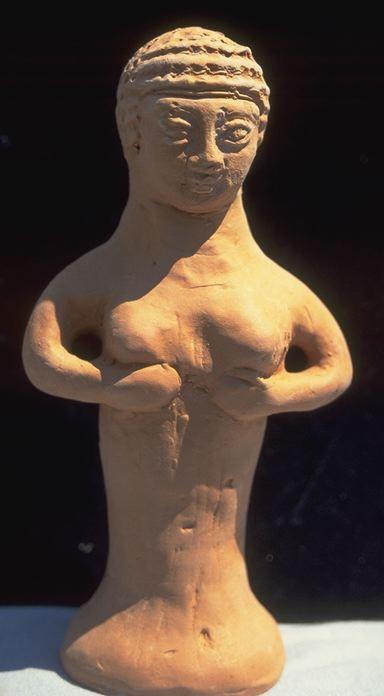
Ancient sculpture of Asherah
Now which human leader do you want to follow in place of God Almighty?
 Dan L. White Homeschool Helpers