The End Time Church: from the Cathedrals to the Catacombs
By Dan L. White
Copyright ©2016 by Dan L. White, all rights reserved.
Scripture quotations are from the World English Bible (WEB) which is in the public domain.
Chapter 16
Kings of Judah
Israel had 19 kings, all losers. Judah also had 19 kings. How did they do?
Judah also had one queen, self appointed. That’s not a good sign.
Unlike Israel, with its nine different dynasties, all the kings of Judah were of one family, the descendants of David. The first king of Judah was Solomon’s son Rehoboam, and he began well.
2 Chronicles 11:16-17
16) After them, out of all the tribes of Israel, those who set their hearts to seek Yahweh, the God of Israel, came to Jerusalem to sacrifice to Yahweh, the God of their fathers.
(17) So they strengthened the kingdom of Judah, and made Rehoboam the son of Solomon strong for three years; for they walked three years in the way of David and Solomon.
But that old bugaboo of human kings — human nature — bore down on Rehoboam.
2 Chronicles 12:1
(1) When the kingdom of Rehoboam was established and he was strong, he abandoned Yahweh’s law, and all Israel with him.
1 Kings 14
(22) Judah did that which was evil in Yahweh’s sight, and they provoked him to jealousy with their sins which they committed, above all that their fathers had done.
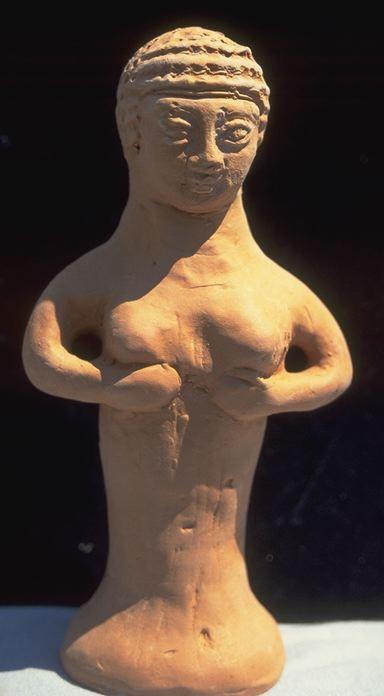
(23) For they also built for themselves high places, sacred pillars, and Asherah poles on every high hill and under every green tree.
(24) There were also sodomites in the land. They did according to all the abominations of the nations which Yahweh drove out before the children of Israel.
Amazingly, in the time of David’s grandson, Judah was already acting like Sodom. When Judah did that, God did this.
(25) In the fifth year of king Rehoboam, Shishak king of Egypt came up against Jerusalem,
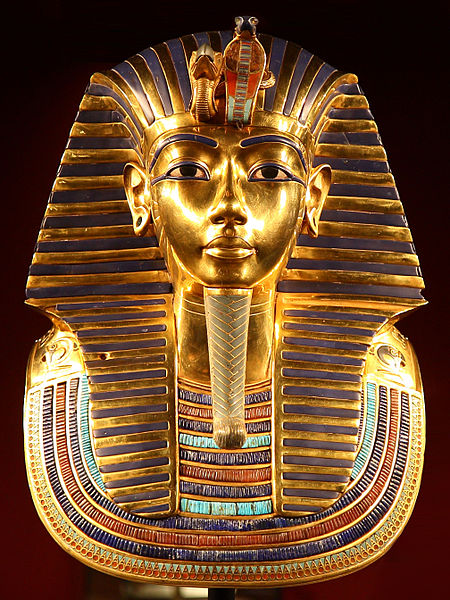
(26) and he took away the treasures of Yahweh’s house, and the treasures of the kings house. He even took away all of it, including all the gold shields which Solomon had made.
So Rehoboam was a reprobate. Then his son Abijah was a chip off the old block.
1 Kings 15:3
(3) He walked in all the sins of his father, which he had done before him; and his heart was not perfect with Yahweh his God, as the heart of David his father.
At this point we have looked at the three kings of the united monarchy, then nineteen kings of the ten tribes, and now two kings of Judah, and we have only seen one good king, David.
Then a most unusual thing happened.
Another good king came along.
1 Kings 15:11-14
(11) Asa did that which was right in Yahweh’s eyes, as David his father did.
(12) He put away the sodomites out of the land, and removed all the idols that his fathers had made.
(13) He also removed Maacah his [grand]mother from being queen, because she had made an
bominable image for an Asherah. Asa cut down her image and burned it at the brook Kidron.
(14) But the high places were not taken away. Nevertheless the heart of Asa was perfect with Yahweh all his days.
Asa was a good king, somewhat like his great-great-grandfather David, and totally unlike all of the ten tribe kings. But, believe it or not, Asa was human, so it was inevitable that sometime during his reign, he would make an Asa out of himself.
2 Chronicles 16:1-10
(1) In the thirty-sixth year of Asa’s reign, Baasha king of Israel went up against Judah, and built Ramah, that he might not allow anyone to go out or come in to Asa king of Judah.
(2) Then Asa brought out silver and gold out of the treasures of Yahweh’s house and of the king’s house, and sent to Ben Hadad king of Syria, who lived at Damascus, saying,
(3) “Let there be a treaty between me and you, as there was between my father and your father. Behold, I have sent you silver and gold. Go, break your treaty with Baasha king of Israel, that he may depart from me.”
(4) Ben Hadad listened to king Asa, and sent the captains of his armies against the cities of Israel; and they struck Ijon, Dan, Abel Maim, and all the storage cities of Naphtali.
(7) At that time Hanani the seer came to Asa king of Judah, and said to him, “Because you have relied on the king of Syria, and have not relied on Yahweh your God, therefore the army of the king of Syria has escaped out of your hand.
(8) Weren’t the Ethiopians and the Lubim a huge army, with chariots and horsemen exceeding many? Yet, because you relied on Yahweh, he delivered them into your hand.
(9) For Yahweh’s eyes run back and forth throughout the whole earth, to show himself strong in the behalf of them whose heart is perfect toward him. You have done foolishly in this; for from now on you will have wars.”
(10) Then Asa was angry with the seer, and put him in the prison; for he was in a rage with him because of this thing. Asa oppressed some of the people at the same time.
Notice that when a king has problems, the people have problems and Asa oppressed the people. But overall, human as he was, Asa was an obedient king.
Asa’s son Jehoshaphat was a good king, too.
2 Chronicles 17:3-4
(3) Yahweh was with Jehoshaphat, because he walked in the first ways of his father David, and didn’t seek the Baals,
(4) but sought to the God of his father, and walked in his commandments, and not in the ways of Israel.
Jehoshaphat even sent princes and Levites throughout his kingdom of Judah to teach his people Yahweh’s law. However, the troubles in Jehoshaphat’s life came from:
- Trying to spell his name;
- Being buddies with Ahab.
Jehoshaphat tried to keep the family of Israel together, and he befriended Ahab the Baal loving king of Israel.
2 Chronicles 18:1
(1) Now Jehoshaphat had riches and honor in abundance; and he allied himself with Ahab.
Jehoshaphat generally obeyed God’s law himself, but he did not stand against those who hated Yahweh and that was the great sin in his life.
2 Chronicles 19:1-2
(1) Jehoshaphat the king of Judah returned to his house in peace to Jerusalem.
(2) Jehu the son of Hanani the seer went out to meet him, and said to king Jehoshaphat, “Should you help the wicked, and love those who hate Yahweh? Because of this, wrath is on you from before Yahweh.
Judah had seen two good kings in a row, but because of Jehoshaphat’s buddying up to Ahab, the whole royal line of David was almost ended.
Jehoshaphat married his son Jehoram to Ahab daughter Athaliah.
2 Chronicles 21:4-6
(4) Now when Jehoram had risen up over the kingdom of his father, and had strengthened himself, he killed all his brothers with the sword, and also some of the princes of Israel.
(5) Jehoram was thirty-two years old when he began to reign, and he reigned eight years in Jerusalem.
(6) He walked in the way of the kings of Israel, as did Ahab’s house; for he had Ahab’s daughter as his wife. He did that which was evil in Yahweh’s sight.
Jehoram had a gut wrenching reign of eight years, that ended with his gut wrenching.
2 Chronicles 21:18-20
(18) After all this Yahweh struck him in his bowels with an incurable disease.
(19) In process of time, at the end of two years, his bowels fell out by reason of his sickness, and he died of severe diseases. His people made no burning for him, like the burning of his fathers.
(20) He was thirty-two years old when he began to reign, and he reigned in Jerusalem eight years. He departed without being missed; and they buried him in David’s city, but not in the tombs of the kings.
Jehoram’s son Ahaziah ruled for only one year — not a good year.
2 Kings 8:26-27
(26) Ahaziah was twenty-two years old when he began to reign; and he reigned one year in Jerusalem. His mother’s name was Athaliah the daughter [granddaughter] of Omri king of Israel.(27) He walked in the way of Ahab’s house, and did that which was evil in Yahweh’s sight, as did Ahab’s house; for he was the son-in-law of Ahab’s house.
This was a strange situation, because Ahaziah was a descendant of good King David and the grandson of filthy King Ahab. Jehu of Israel also killed Ahaziah of Judah when he eliminated the others of Ahab’s line. With her son gone, Athaliah, the daughter of Ahab, took over as queen and killed off all her competition, including her own grandchildren.
That’s what evil rulers do. They do not leave their position in God’s hands. Instead they try to lay hands on any possible threat.
Except Athaliah missed one.
2 Chronicles 22:10-12
(10) Now when Athaliah the mother of Ahaziah saw that her son was dead, she arose and destroyed all the royal offspring of the house of Judah.
(11) But Jehoshabeath, the king’s daughter, took Joash the son of Ahaziah, and stealthily rescued him from among the king’s sons who were slain, and put him and his nurse in the bedroom. So Jehoshabeath, the daughter of king Jehoram, the wife of Jehoiada the priest (for she was the sister of Ahaziah), hid him from Athaliah, so that she didn’t kill him.
(12) He was with them hidden in God’s house six years while Athaliah reigned over the land.
When Joash, that little boy, was seven, he was crowned king and Athaliah was executed. Then King Joash was obedient as long as Jehoiada, the man who raised him, was alive. When Jehoiada died, though, Joash turned his coat inside out.
2 Chronicles 24:17-18
(17) Now after the death of Jehoiada, the princes of Judah came, and bowed down to the king. Then the king listened to them.
(18) They abandoned the house of Yahweh, the God of their fathers, and served the Asherah poles and the idols, so wrath came on Judah and Jerusalem for this their guiltiness.
Consequently Joash was assassinated by his own servants, and then his son Amaziah ruled.
2 Chronicles 25:2
(2) He did that which was right in Yahweh’s eyes, but not with a perfect heart.
After God gave Amaziah a great victory over Edom, he then brought home the losing gods.
2 Chronicles 25:14
(14) Now after Amaziah had come from the slaughter of the Edomites, he brought the gods of the children of Seir, and set them up to be his gods, and bowed down himself before them, and burned incense to them.
His reign ended when he, too, was assassinated.
At this point, eight kings had ruled over Judah. Only two, Asa and Jehoshaphat, were steadily obedient, notwithstanding their problems. The ninth king was Uzziah, and he was dependably obedient.
Especially after he got leprosy.
2 Chronicles 26:5
(5) He set himself to seek God in the days of Zechariah, who had understanding in the vision of God; and as long as he sought Yahweh, God made him prosper.
However, whose vanity can take being in the position of a king?
2 Chronicles 26:16-19
(16) But when he was strong, his heart was lifted up, so that he did corruptly, and he trespassed against Yahweh his God; for he went into Yahweh’s temple to burn incense on the altar of incense.
(17) Azariah the priest went in after him, and with him eighty priests of Yahweh, who were valiant men.
(18) They resisted Uzziah the king, and said to him, “It isn’t for you, Uzziah, to burn incense to Yahweh, but for the priests the sons of Aaron, who are consecrated to burn incense. Go out of the sanctuary, for you have trespassed. It will not be for your honor from Yahweh God.”
(19) Then Uzziah was angry. He had a censer in his hand to burn incense, and while he was angry with the priests, the leprosy broke out on his forehead before the priests in Yahweh’s house, beside the altar of incense.
Uzziah was a good king, like Asa and Jehoshaphat, and like those kings, he had human nature that got away from him. The position of a king is hardest on the king himself. Political and religious rulers alike can hardly restrain themselves from burning the incense.
Uzziah’s son Jotham was just good old Jo.
2 Chronicles 27:1-2
(1) Jotham was twenty-five years old when he began to reign, and he reigned sixteen years in Jerusalem. His mother’s name was Jerushah the daughter of Zadok.
(2) He did that which was right in Yahweh’s eyes, according to all that his father Uzziah had done. However he didn’t enter into Yahweh’s temple. The people still acted corruptly.
Not a lot is said about Jotham. He didn’t enter the temple like a priest, as his father had done. Lesson learned there. But under good old Jo —
The people still acted corruptly.
Interesting point. Judah had a good king, Jotham. In fact, she had experienced two good kings in a row. Yet under those good kings, The people still acted corruptly.
Obviously, the bad kings did not protect the flock from evil but led them to evil. We see here, though, that even the good kings did not protect the flock. Kings — even good kings — cannot force their people to have obedient hearts. Whether by leadership example or force of might, one man cannot change another man’s heart.
Isaiah 1:1-6
(1) The vision of Isaiah the son of Amoz, which he saw concerning Judah and Jerusalem, in the days of Uzziah, Jotham, Ahaz, and Hezekiah, kings of Judah.
(2) Hear, heavens, and listen, earth; for Yahweh has spoken: “I have nourished and brought up children, and they have rebelled against me.
(3) The ox knows his owner, and the donkey his master’s crib; but Israel doesn’t know, my people don’t consider.”
(4) Ah sinful nation, a people loaded with iniquity, offspring of evildoers, children who deal corruptly! They have forsaken Yahweh. They have despised the Holy One of Israel. They are estranged and backward.
(5) Why should you be beaten more, that you revolt more and more? The whole head is sick, and the whole heart faint.
(6) From the sole of the foot even to the head there is no soundness in it: wounds, welts, and open sores. They haven’t been closed, neither bandaged, neither soothed with oil.
Three of those four kings in Isaiah’s time were good kings, yet Judah was still a sinful nation.
Ahaz was the one king of those four who was not good.
2 Chronicles 28:1-5
(1) Ahaz was twenty years old when he began to reign, and he reigned sixteen years in Jerusalem. He didn’t do that which was right in Yahweh’s eyes, like David his father,
(2) but he walked in the ways of the kings of Israel, and also made molten images for the Baals.
(3) Moreover he burned incense in the valley of the son of Hinnom, and burned his children in the fire, according to the abominations of the nations whom Yahweh cast out before the children of Israel.
(4) He sacrificed and burned incense in the high places, and on the hills, and under every green tree.
(5) Therefore Yahweh his God delivered him into the hand of the king of Syria. They struck him, and carried away from him a great multitude of captives, and brought them to Damascus. He was also delivered into the hand of the king of Israel, who struck him with a great slaughter.
Again we see the pattern of the time of the judges repeated. The type of human government did not make one hill of beans difference. All that mattered was being close to God.
Ahaz was one of the very worst kings of Judah, yet he was the son of good old Jo — Jotham — and was the father of Hezekiah, one of the best kings of Judah. Everyone is an individual.
2 Chronicles 29:1-10
(1) Hezekiah began to reign when he was twenty-five years old, and he reigned twenty-nine years in Jerusalem. His mother’s name was Abijah, the daughter of Zechariah.
(2) He did that which was right in Yahweh’s eyes, according to all that David his father had done.
(3) In the first year of his reign, in the first month, he opened the doors of Yahweh’s house, and repaired them.
(4) He brought in the priests and the Levites, and gathered them together into the wide place on the east,
(5) and said to them, “Listen to me, you Levites! Now sanctify yourselves, and sanctify Yahweh, the God of your fathers’ house, and carry the filthiness out of the holy place.
(6) For our fathers were unfaithful, and have done that which was evil in Yahweh our God’s sight, and have forsaken him, and have turned away their faces from the habitation of Yahweh, and turned their backs.
(7) Also they have shut up the doors of the porch, and put out the lamps, and have not burned incense nor offered burnt offerings in the holy place to the God of Israel.
(8) Therefore Yahweh’s wrath was on Judah and Jerusalem, and he has delivered them to be tossed back and forth, to be an astonishment, and a hissing, as you see with your eyes.
(9) For, behold, our fathers have fallen by the sword, and our sons and our daughters and our wives are in captivity for this.
(10) Now it is in my heart to make a covenant with Yahweh, the God of Israel, that his fierce anger may turn away from us.
After Hezekiah led the people in a tremendous double long Passover feast, this is what happened.
2 Chronicles 30:27
(27) Then the priests the Levites arose and blessed the people. Their voice was heard, and their prayer came up to his holy habitation, even to heaven.
That’s a good prayer. Their voice was heard and their prayer went up to heaven. Hezekiah was a good king!
2 Chronicles 31:21
(21) In every work that he began in the service of God’s house, in the law, and in the commandments, to seek his God, he did it with all his heart, and prospered.
However, even Hezekiah’s heart was lifted up.
2 Chronicles 32:22-26
(22) Thus Yahweh saved Hezekiah and the inhabitants of Jerusalem from the hand of Sennacherib the king of Assyria and from the hand of all others, and guided them on every side.
(23) Many brought gifts to Yahweh to Jerusalem, and precious things to Hezekiah king of Judah; so that he was exalted in the sight of all nations from then on.
(24) In those days Hezekiah was terminally ill, and he prayed to Yahweh; and he spoke to him, and gave him a sign.
(25) But Hezekiah didn’t reciprocate appropriate to the benefit done for him, because his heart was lifted up. Therefore there was wrath on him, and on Judah and Jerusalem.
(26) Notwithstanding Hezekiah humbled himself for the pride of his heart, both he and the inhabitants of Jerusalem, so that Yahweh’s wrath didn’t come on them in the days of Hezekiah.
And that heart of Hezekiah’s, which sought God so diligently, had still more problems.
2 Chronicles 32:31
(31) However concerning the ambassadors of the princes of Babylon, who sent to him to inquire of the wonder that was done in the land, God left him, to try him, that he might know all that was in his heart.
2 Kings 20:12-15
(12) At that time Berodach Baladan the son of Baladan, king of Babylon, sent letters and a present to Hezekiah; for he had heard that Hezekiah had been sick.
(13) Hezekiah listened to them, and showed them all the storehouse of his precious things, the silver, the gold, the spices, and the precious oil, and the house of his armor, and all that was found in his treasures. There was nothing in his house, or in all his dominion, that Hezekiah didn’t show them.
(14) Then Isaiah the prophet came to king Hezekiah, and said to him, “What did these men say? From where did they come to you?” Hezekiah said, “They have come from a far country, even from Babylon.”
(15) He said, “What have they seen in your house?” Hezekiah answered, “They have seen all that is in my house. There is nothing among my treasures that I have not shown them.”
Show off!
Hezekiah was absolutely one of the best kings of Judah, diligent and dedicated, yet he still had self-exalting human nature. So where does that leave us who are not so diligent and dedicated? And where does that leave modern religious leaders, who are also not at the spiritual level of Hezekiah?
When Hezekiah was sick to the point of death and was then given fifteen more years to live, he begat his son Manasseh during that fifteen years. And when he was grown, Manasseh begat the destruction of Jerusalem.
2 Chronicles 33:1-13
(1) Manasseh was twelve years old when he began to reign, and he reigned fifty-five years in Jerusalem.
(2) He did that which was evil in Yahweh’s sight, after the abominations of the nations whom Yahweh cast out before the children of Israel.
(3) For he built again the high places which Hezekiah his father had broken down; and he raised up altars for the Baals, made Asheroth, and worshiped all the army of the sky, and served them.
(4) He built altars in Yahweh’s house, of which Yahweh said, “My name shall be in Jerusalem forever.”
(5) He built altars for all the army of the sky in the two courts of Yahweh’s house.
(6) He also made his children to pass through the fire in the valley of the son of Hinnom. He practiced sorcery, divination, and witchcraft, and dealt with those who had familiar spirits, and with wizards. He did much evil in Yahweh’s sight, to provoke him to anger.
(7) He set the engraved image of the idol, which he had made, in God’s house, of which God said to David and to Solomon his son, “In this house, and in Jerusalem, which I have chosen out of all the tribes of Israel, I will put my name forever.
(8) I will not any more remove the foot of Israel from off the land which I have appointed for your fathers, if only they will observe to do all that I have commanded them, even all the law, the statutes, and the ordinances given by Moses.”
(9) Manasseh seduced Judah and the inhabitants of Jerusalem, so that they did more evil than did the nations whom Yahweh destroyed before the children of Israel.
(10) Yahweh spoke to Manasseh, and to his people; but they didn’t listen.
(11) Therefore Yahweh brought on them the captains of the army of the king of Assyria, who took Manasseh in chains, bound him with fetters, and carried him to Babylon.
(12) When he was in distress, he begged Yahweh his God, and humbled himself greatly before the God of his fathers.
(13) He prayed to him; and he was entreated by him, and heard his supplication, and brought him again to Jerusalem into his kingdom. Then Manasseh knew that Yahweh was God.
Even though Manasseh personally repented, the people did not. The nation had gone too far and the line of ultimate destruction had been crossed. During the later reign of good king Josiah, the Manasseh effect was still in effect.
2Kings 23:26
(26) Notwithstanding, Yahweh didn’t turn from the fierceness of his great wrath, with which his anger burned against Judah, because of all the provocation with which Manasseh had provoked him.
Manasseh reigned 55 years, but his son Amon only reigned for two years.
Fortunately.
2 Chronicles 33:21-24
(21) Amon was twenty-two years old when he began to reign; and he reigned two years in Jerusalem.
(22) He did that which was evil in Yahweh’s sight, as did Manasseh his father; and Amon sacrificed to all the engraved images which Manasseh his father had made, and served them.
(23) He didn’t humble himself before Yahweh, as Manasseh his father had humbled himself; but this same Amon trespassed more and more.
(24) His servants conspired against him, and put him to death in his own house.
Each person is an individual, with his own character for good or evil. Hezekiah had Manasseh, who was evil but then repented. Manasseh had Amon, who was evil and did not repent. And Amon had Josiah.
2 Kings 22:2
(2) He did that which was right in Yahweh’s eyes, and walked in all the way of David his father, and didn’t turn away to the right hand or to the left.
Josiah delayed the destruction of Jerusalem, which was set from the time of Manasseh.
2 Kings 22:16-20
(16) “Yahweh says, ‘Behold, I will bring evil on this place, and on its inhabitants, even all the words of the book which the king of Judah has read.
(17) Because they have forsaken me, and have burned incense to other gods, that they might provoke me to anger with all the work of their hands, therefore my wrath shall be kindled against this place, and it will not be quenched.’”
(18) But to the king of Judah, who sent you to inquire of Yahweh, tell him, “Yahweh the God of Israel says, ‘Concerning the words which you have heard,
(19) because your heart was tender, and you humbled yourself before Yahweh, when you heard what I spoke against this place, and against its inhabitants, that they should become a desolation and a curse, and have torn your clothes, and wept before me; I also have heard you,’ says Yahweh.
(20) ‘Therefore behold, I will gather you to your fathers, and you will be gathered to your grave in peace. Your eyes will not see all the evil which I will bring on this place.’”’” So they brought this message back to the king.
Josiah was a whole-hearted God seeker.
2 Chronicles 34:3-7
(3) For in the eighth year of his reign, while he was yet young, he began to seek after the God of David his father; and in the twelfth year he began to purge Judah and Jerusalem from the high places, the Asherah poles, the engraved images, and the molten images.
(4) They broke down the altars of the Baals in his presence; and he cut down the incense altars that were on high above them. He broke the Asherah poles, the engraved images, and the molten images in pieces, made dust of them, and scattered it on the graves of those who had sacrificed to them.
(5) He burned the bones of the priests on their altars, and purged Judah and Jerusalem.
(6) He did this in the cities of Manasseh, Ephraim, and Simeon, even to Naphtali, around in their ruins.
(7) He broke down the altars, and beat the Asherah poles and the engraved images into powder, and cut down all the incense altars throughout all the land of Israel, then returned to Jerusalem.
This king even made all his subjects serve Yahweh.
2 Chronicles 34:31-33
(31) The king stood in his place, and made a covenant before Yahweh, to walk after Yahweh, and to keep his commandments, and his testimonies, and his statutes, with all his heart, and with all his soul, to perform the words of the covenant that were written in this book.
(32) He caused all who were found in Jerusalem and Benjamin to stand. The inhabitants of Jerusalem did according to the covenant of God, the God of their fathers.
(33) Josiah took away all the abominations out of all the countries that belonged to the children of Israel, and made all who were found in Israel to serve, even to serve Yahweh their God. All his days they didn’t depart from following Yahweh, the God of their fathers.
Yet in Josiah’s time, this is how the people of Judah really were.
Jeremiah 5:1-5
(1) “Run back and forth through the streets of Jerusalem, and see now, and know, and seek in its wide places, if you can find a man, if there is anyone who does justly, who seeks truth, then I will pardon her.
(2) Though they say, ‘As Yahweh lives,’ surely they swear falsely.”
(3) O Yahweh, don’t your eyes look on truth? You have stricken them, but they were not grieved. You have consumed them, but they have refused to receive correction. They have made their faces harder than a rock. They have refused to return.
(4) Then I said, “Surely these are poor. They are foolish; for they don’t know the way of Yahweh, nor the law of their God.
(5) I will go to the great men, and will speak to them; for they know the way of Yahweh, and the law of their God.” But these with one accord have broken the yoke, and burst the bonds.
Yet Josiah, too, had a human nature glitch, when he unwisely confronted the Pharaoh of Egypt, and so ended his life.
After Josiah came the final four kings. In sports, the final four is the best of the lot. Judah’s final four kings, though, were all losers.
First, Josiah’s son Jehoahaz.
2 Kings 23:32-34
(32) He [Jehoahaz] did that which was evil in Yahweh’s sight, according to all that his fathers had done.
(33) Pharaoh Necoh put him in bonds at Riblah in the land of Hamath, that he might not reign in Jerusalem; and put the land to a tribute of one hundred talents of silver, and a talent of gold.
(34) Pharaoh Necoh made Eliakim the son of Josiah king in the place of Josiah his father, and changed his name to Jehoiakim; but he took Jehoahaz away, and he came to Egypt and died there.
Next, Josiah’s son Jehoiakim.
2 Chronicles 36:5-6
(5) Jehoiakim was twenty-five years old when he began to reign, and he reigned eleven years in Jerusalem. He did that which was evil in Yahweh his God’s sight.
(6) Nebuchadnezzar king of Babylon came up against him, and bound him in fetters to carry him to Babylon.
Then Josiah’s grandson Jehoiachin ruled for three months.
2 Kings 24:8-9
(8) Jehoiachin was eighteen years old when he began to reign, and he reigned in Jerusalem three months. His mother’s name was Nehushta the daughter of Elnathan of Jerusalem.
(9) He did that which was evil in Yahweh’s sight, according to all that his father had done.
Finally another son of Josiah brought up the rear.
2 Chronicles 36:11-12
(11) Zedekiah was twenty-one years old when he began to reign, and he reigned eleven years in Jerusalem.
(12) He did that which was evil in Yahweh his God’s sight. He didn’t humble himself before Jeremiah the prophet speaking from Yahweh’s mouth.
And that was it.
Those were the nineteen kings of Judah. Asa and Jehoshaphat were good, Jotham and Uzziah were good, Joash was good then bad, Amaziah was good then worshiped the losing gods, Manasseh was bad then good, and Hezekiah and Josiah were outstanding. And queen (small q) Athaliah wasn’t really queen at all.
The kings of Judah were numerically better than the kings of Israel, they did have some good kings, but in the end Judah was even worse than Israel.
Ezekiel 16:51
(51) Samaria hasn’t committed half of your sins; but you have multiplied your abominations more than they, and have justified your sisters by all your abominations which you have done.
So how did putting another government in place of God work out?
Psalms 47:1-9
For the Chief Musician. A Psalm by the sons of Korah.
(1) Oh clap your hands, all you nations. Shout to God with the voice of triumph!
(2) For Yahweh Most High is awesome. He is a great King over all the earth.
(3) He subdues nations under us, and peoples under our feet.
(4) He chooses our inheritance for us, the glory of Jacob whom he loved. Selah.
(5) God has gone up with a shout, Yahweh with the sound of a trumpet.
(6) Sing praises to God, sing praises. Sing praises to our King, sing praises.
(7) For God is the King of all the earth. Sing praises with understanding.
(8) God reigns over the nations. God sits on his holy throne.
(9) The princes of the peoples are gathered together, the people of the God of Abraham. For the shields of the earth belong to God. He is greatly exalted!

 Dan L. White Homeschool Helpers