The End Time Church: From the Cathedrals to the Catacombs
By Dan L. White
Copyright 2020 by Dan L. White, all rights reserved.
Scripture quotations are from the World English Bible (WEB) which is in the public domain.
Chapter 87
Don’t Mess with the Ark
Some of the stuff in the Ark went missing.
Why was it called an ark?
Or as Bill Cosby said in his old and famous Noah comedy routine —
“What’s an ark?”
The Hebrew word ‘aron’ means a box or chest. The English word ‘ark’ likewise meant a box or chest, from the Latin ‘arca,’ which meant a box or chest. So the Ark of the Covenant means “box of the agreement.” That box originally held manna, Aaron’s rod, and the two Ten Commandment tablets. But by the time Solomon put that box into the new Temple he had just built, some of that stuff was missing.
1Kgs 8 1) Then Solomon assembled the elders of Israel, and all the heads of the tribes, the princes of the fathers’ households of the children of Israel, to king Solomon in Jerusalem, to bring up the ark of the covenant of Yahweh out of the city of David, which is Zion. 2) All the men of Israel assembled themselves to king Solomon at the feast, in the month Ethanim, which is the seventh month. 3) All the elders of Israel came, and the priests took up the ark. 4) They brought up the ark of Yahweh, and the Tent of Meeting, and all the holy vessels that were in the Tent; even these the priests and the Levites brought up.
This was about four centuries after Moses. And all that was left in the Ark was —
1Kgs 8 9) There was nothing in the ark except the two tables of stone which Moses put there at Horeb, when Yahweh made a covenant with the children of Israel, when they came out of the land of Egypt. 10) It came to pass, when the priests had come out of the holy place, that the cloud filled the house of Yahweh, 11) so that the priests could not stand to minister by reason of the cloud; for the glory of Yahweh filled the house of Yahweh.
What happened to Aaron’s rod and the manna?
The Bible never says.
When the Ark was put into the new Temple, though, God approved it even without that stuff, because His cloud filled the Temple.
With the rod and manna gone, only the Ten Commandments were left in the Ark of the Testimony. We don’t know what happened to the rod and manna.
Did someone reach into the Ark and take them out?
When Phinehas and Hophni took the Ark of the Covenant into battle against the Philistines, the Philistines captured it.
The Ark was to be carried by Levites with poles through rings on the corners. Yet somehow the Philistines managed to carry the Ark from the battlefield to the temple of their “god” Dagon. They were obviously not Levites but they had great respect for the Ark and the God that had conquered Egypt. Since none of the Philistines were killed carrying the Ark, they must have carried it by the poles without touching it.
But when they placed the ark in front of Dagon, that was definitely disrespectful and, dagonit! — Dagon kept falling down before it.
1Sam 5 2) The Philistines took God’s ark, and brought it into the house of Dagon, and set it by Dagon. 3) When the people of Ashdod arose early on the next day, behold, Dagon had fallen on his face to the ground before Yahweh’s ark. They took Dagon, and set him in his place again. 4) When they arose early on the following morning, behold, Dagon had fallen on his face to the ground before Yahweh’s ark; and the head of Dagon and both the palms of his hands were cut off on the threshold. Only Dagon’s torso was intact.
After that, the Philistines themselves began to have problems with their own torsos.
1Sam 5 6) But the hand of Yahweh was heavy on them of Ashdod, and he destroyed them, and struck them with tumors, even Ashdod and its borders.
Mickelson’s Strong Dictionary says that the Hebrew word for tumors means “a tumor in the anus or pudenda.” Or as the King James version says, “emerods,” or hemorrhoids.
The Philistines did not have Preparation H, but they did have big T –
Trouble.
1Sam 5 7) When the men of Ashdod saw that it was so, they said, “The ark of the God of Israel shall not stay with us; for his hand is severe on us, and on Dagon our god.”
When they saw that Dagon wasn’t doing real well against Yahweh, why was he still their god? Can you imagine them taking someone into their temple to show Dagon off? A headless god with no hands couldn’t have been too impressive!
1Sam 5 8) They sent therefore and gathered all the lords of the Philistines to them, and said, “What shall we do with the ark of the God of Israel?” They answered, “Let the ark of the God of Israel be carried over to Gath.” They carried the ark of the God of Israel there. 9) It was so, that after they had carried it about, the hand of Yahweh was against the city with a very great confusion: and he struck the men of the city, both small and great; and tumors broke out on them. 10) So they sent the ark of God to Ekron. It happened, as the ark of God came to Ekron, that the Ekronites cried out, saying, “They have brought about the ark of the God of Israel to us, to kill us and our people.” 11) They sent therefore and gathered together all the lords of the Philistines, and they said, “Send away the ark of the God of Israel, and let it go again to its own place, that it not kill us and our people.” For there was a deadly confusion throughout all the city; the hand of God was very heavy there. 12) The men who didn’t die were struck with the tumors; and the cry of the city went up to heaven.
Which is to say, their cries about their bottoms rose to the tops of the heavens.
The Philistines desperately sent the Ark back to Israel. So they set it on a new cart, and they must have used the poles to put it up there because nobody died moving it. Two untrained cows, without a human driver, pulled the cart back to Beth Shemesh in Israel.
Israel was overjoyed to have the Ark back, but their joy turned to sorrow because the men of Beth Shemesh showed less respect for the Ark than the Philistines had.
1Sam 6 19) He struck of the men of Beth Shemesh, because they had looked into the ark of Yahweh, he struck of the people fifty thousand seventy men [ESV – He struck seventy men of them] ; and the people mourned, because Yahweh had struck the people with a great slaughter.
What do we learn from that experience of the Philistines and Beth Shemesh?
First, any Gentiles who take the Ark are in big trouble.
Second, whoever has the Ark better treat it with the utmost respect.
From Beth Shemesh, the Ark was taken to the house of Abinadab in Israel. He set apart his son Eleazar to take care of the ark.
1Sam 7 1) The men of Kiriath Jearim came, and fetched up the ark of Yahweh, and brought it into the house of Abinadab in the hill, and sanctified Eleazar his son to keep the ark of Yahweh. 2) It happened, from the day that the ark stayed in Kiriath Jearim, that the time was long; for it was twenty years: and all the house of Israel lamented after Yahweh.
The men of Kiriath Jearim were able to safely move the Ark, and it remained in that town, with no one disrespecting it and no one getting hurt. Apparently Eleazar the caretaker was really respectful with the Ark.
But his brother wasn’t.
David wanted to move the Ark to the city of David. That’s when Abinadab, whose son Eleazar had taken care of the Ark for years, lost that other son.
2Sam 6 3) They set the ark of God on a new cart, and brought it out of the house of Abinadab that was in the hill: and Uzzah and Ahio, the sons of Abinadab, drove the new cart. 4) They brought it out of the house of Abinadab, which was in the hill, with the ark of God: and Ahio went before the ark. 5) David and all the house of Israel played before Yahweh with all kinds of instruments made of fir wood, and with harps, and with stringed instruments, and with tambourines, and with castanets, and with cymbals. 6) When they came to the threshing floor of Nacon, Uzzah reached for the ark of God, and took hold of it; for the cattle stumbled. 7) The anger of Yahweh was kindled against Uzzah; and God struck him there for his error; and there he died by the ark of God.
Again we see the lesson. Be very careful with the Ark of the Covenant!
But those who were respectful of the Ark?
2Sam 6 10) So David would not move the ark of Yahweh to be with him in the city of David; but David carried it aside into the house of Obed-Edom the Gittite. 11) The ark of Yahweh remained in the house of Obed-Edom the Gittite three months: and Yahweh blessed Obed-Edom, and all his house. 12) It was told king David, saying, “Yahweh has blessed the house of Obed-Edom, and all that pertains to him, because of the ark of God.” David went and brought up the ark of God from the house of Obed-Edom into the city of David with joy.
In that move, David followed God’s instructions for moving the Ark and all went well.
Then when David fled Jerusalem because of Absalom’s coup, the priests were going to follow David with the Ark, but David sent them back.
2Sam 15 23) All the country wept with a loud voice, and all the people passed over: the king also himself passed over the brook Kidron, and all the people passed over, toward the way of the wilderness. 24) Behold, Zadok also came, and all the Levites with him, bearing the ark of the covenant of God; and they set down the ark of God; and Abiathar went up, until all the people finished passing out of the city. 25) The king said to Zadok, “Carry back the ark of God into the city. If I find favor in the eyes of Yahweh, he will bring me again, and show me both it, and his habitation; 26) but if he say thus, ‘I have no delight in you;’ behold, here am I. Let him do to me as seems good to him.”
The last time the Old Testament mentions the box that Moses built was in Josiah’s time. King Josiah reigned over Judah only a few decades before Jerusalem and the Temple were destroyed. By this time, the Temple had been so neglected that it required a major refurbishing. After the Temple was repaired, Josiah told the Levites to put the Ark back in the Temple.
2Chr 34 8) Now in the eighteenth year of his [Josiah’s] reign, when he had purged the land and the house, he sent Shaphan the son of Azaliah, and Maaseiah the governor of the city, and Joah the son of Joahaz the recorder, to repair the house of Yahweh his God.
And after those repairs were finished —
2Chr 35 3) He said to the Levites who taught all Israel, who were holy to Yahweh, “Put the holy ark in the house which Solomon the son of David king of Israel built. There shall no more be a burden on your shoulders. Now serve Yahweh your God, and his people Israel.
Again, that’s the last time the Ark is mentioned in the Hebrew scriptures.
So what do we learn from this brief history of the Ark?
1) Gentiles who took the Ark were cursed. The Ark belonged with Israel.
2) Anyone, Israel included, who disrespected the Ark was in mortal danger.
But it’s been missing for over two and a half millennia. How could anyone have possibly taken it without losing his own life, like the Philistines, or the men of Beth Shemesh, or Uzzah?
All of which still leaves the very puzzling question —
The End Time Church: From the Cathedrals to the Catacombs
By Dan L. White
Copyright 2020 by Dan L. White, all rights reserved.
Scripture quotations are from the World English Bible (WEB) which is in the public domain.
Chapter 86
The Ark, the Law and the Mercy
I will not mention all the movies, documentaries and TV specials that have been made about the Ark of the Covenant, because there are so many.
Okay, I will mention the one you’re most likely remembering, where an archaeologist races to find the Ark before Hitler gets it and uses it to conquer the world.
One little problem with that scenario?
God does not work through evil people.
Like Hitler.
Or Hophni and Phinehas.
Hitler was the wicked son of old man Hitler, and Hophni and Phinehas were the wicked sons of Eli, a priest and judge of Israel. Hophni and Phinehas were also priests – but perverse priests. The content of their character counted way more than their godly position. Those with evil character in God appointed positions are doomed to lose those positions, as Hophni and Phinehas did.
They also lost their lives.
1Sam 4 2) The Philistines put themselves in array against Israel: and when they joined battle, Israel was struck before the Philistines; and they killed of the army in the field about four thousand men. 3) When the people had come into the camp, the elders of Israel said, “Why has Yahweh struck us today before the Philistines? Let us get the ark of the covenant of Yahweh out of Shiloh to us, that it may come among us, and save us out of the hand of our enemies.” 4) So the people sent to Shiloh; and they brought from there the ark of the covenant of Yahweh of Armies, who sits above the cherubim: and the two sons of Eli, Hophni and Phinehas, were there with the ark of the covenant of God. 5) When the ark of the covenant of Yahweh came into the camp, all Israel shouted with a great shout, so that the earth rang again. 6) When the Philistines heard the noise of the shout, they said, “What does the noise of this great shout in the camp of the Hebrews mean?” They understood that the ark of Yahweh had come into the camp. 7) The Philistines were afraid, for they said, “God has come into the camp.” They said, “Woe to us! For there has not been such a thing before. 8) Woe to us! Who shall deliver us out of the hand of these mighty gods? These are the gods that struck the Egyptians with all kinds of plagues in the wilderness. 9) Be strong, and behave like men, O you Philistines, that you not be servants to the Hebrews, as they have been to you. Strengthen yourselves like men, and fight!” 10) The Philistines fought, and Israel was struck, and they fled every man to his tent: and there was a very great slaughter; for there fell of Israel thirty thousand footmen. 11) The ark of God was taken; and the two sons of Eli, Hophni and Phinehas, were slain.
So the aforementioned movie Raiders of the Lost Ark need not have been made. If Hitler had found the Ark, not only would it not have done him any good – it would have done him in. Steven Spielberg, a Jew who directed the movie, should have known that.
The Ark of the Covenant was a wooden box covered with gold, a model of Yahweh’s throne in heaven. Yahweh Himself gave the plans for the box.
Here they are.
Exod 25 10) “They shall make an ark of acacia wood. Its length shall be two and a half cubits, its breadth a cubit and a half, and a cubit and a half its height.
The Ark was not a big box, roughly four feet by two feet and about two feet tall.
Exod 25 11) You shall overlay it with pure gold. You shall overlay it inside and outside, and you shall make a gold molding around it.
The wood was covered with pure gold, as you might expect for God’s throne.
Exod 25 12) You shall cast four rings of gold for it, and put them in its four feet. Two rings shall be on the one side of it, and two rings on the other side of it. 13) You shall make poles of acacia wood, and overlay them with gold. 14) You shall put the poles into the rings on the sides of the ark to carry the ark. 15) The poles shall be in the rings of the ark. They shall not be taken from it.
The Ark was to be carried by poles that were always left in the rings on the Ark. The carriers could touch the poles but they could not touch the Ark. Don’t lose the poles!
Exod 25 16) You shall put the testimony which I shall give you into the ark.
This box was specifically made to hold Yahweh’s testimony. The Ark of the Covenant was also called the Ark of Testimony, because it held God’s testimony. It was called the Ark of the Covenant because the people made a covenant to keep God’s testimony.
Mickelson’ s Enhanced Strong’s Dictionary says the Hebrew word “eduwth” means “testimony,” and God’s testimony is what God has testified to. And what was the testimony that Yahweh gave, that was put into the Ark of the Testimony?
The Ten Commandments.
Yahweh testified those at Mt. Sinai. He spoke them with His own voice and wrote them with His own finger.
Exod 20:1 (The Ten Commandments) 1) God spoke all these words, saying,
Exod 31:18 18) He gave to Moses, when he finished speaking with him on Mount Sinai, the two tablets of the testimony, stone tablets, written with God’s finger.
Those two stone tablets with God’s testimony were put into the Ark of the Testimony. His Ten Commandments, the law of God, are what God testified to.
Near the end of his life, Moses said —
Deut 10 1) At that time Yahweh said to me, “Cut two tables of stone like the first, and come up to me onto the mountain, and make an ark of wood. 2) I will write on the tables the words that were on the first tables which you broke, and you shall put them in the ark.” 3) So I made an ark of acacia wood, and cut two tables of stone like the first, and went up onto the mountain, having the two tables in my hand. 4) He wrote on the tables, according to the first writing, the ten commandments, which Yahweh spoke to you on the mountain out of the midst of the fire in the day of the assembly: and Yahweh gave them to me. 5) I turned and came down from the mountain, and put the tables in the ark which I had made; and there they are as Yahweh commanded me.
The law was inside the Ark. But on top of the Ark, above the law, was —
Exod 25 17) You shall make a mercy seat of pure gold. Two and a half cubits shall be its length, and a cubit and a half its breadth.
21) You shall put the mercy seat on top of the ark, and in the ark you shall put the testimony that I will give you. 22) There I will meet with you, and I will tell you from above the mercy seat, from between the two cherubim which are on the ark of the testimony, all that I command you for the children of Israel.
The lid was called the mercy seat. That’s where Yahweh sat.
Num 7 89) When Moses went into the Tent of Meeting to speak with Yahweh, he heard his voice speaking to him from above the mercy seat that was on the ark of the Testimony, from between the two cherubim: and he spoke to him.
Where Yahweh is – is mercy. Yahweh’s seat is the seat of mercy.
And God’s mercy is above the law.
The mercy seat on top of the Ark does not do away with the Ten Commandments inside the Ark. The law is not done away by mercy. Without the law there is no need for mercy. The Ten Commandments are enduring law, but God’s mercy can forgive transgressions of that law.
Eph 2 4) But God, being rich in mercy, for his great love with which he loved us, 5) even when we were dead through our trespasses, made us alive together with Christ (by grace you have been saved),
A stick was also put into the Ark — Aaron’s rod.
Israel had complained against Aaron the high priest. God had them take twelve rods, one for each of twelve leaders of Israel, including Aaron’s rod. The next morning Aaron’s rod had budded and bore almonds. The other eleven rods were just dry sticks.
Num 17 8) It happened on the next day, that Moses went into the tent of the testimony; and behold, the rod of Aaron for the house of Levi was budded, and put forth buds, and produced blossoms, and bore ripe almonds. 9) Moses brought out all the rods from before Yahweh to all the children of Israel: and they looked, and took every man his rod. 10) Yahweh said to Moses, “Put back the rod of Aaron before the testimony, to be kept for a token against the children of rebellion; that you may make an end of their murmurings against me, that they not die.”
And in the Ark was a pot of manna.
Exod 16 33) Moses said to Aaron, “Take a pot, and put an omer-full of manna in it, and lay it up before Yahweh, to be kept throughout your generations.” 34) As Yahweh commanded Moses, so Aaron laid it up before the Testimony, to be kept.
Heb 9 2) For a tabernacle was prepared. In the first part were the lampstand, the table, and the show bread; which is called the Holy Place. 3) After the second veil was the tabernacle which is called the Holy of Holies, 4) having a golden altar of incense, and the ark of the covenant overlaid on all sides with gold, in which was a golden pot holding the manna, Aaron’s rod that budded, and the tablets of the covenant;
Then beside the Ark — not in it but by the side of it — was placed the book of the law.
Deut 31 24) It happened, when Moses had made an end of writing the words of this law in a book, until they were finished, 25) that Moses commanded the Levites, who bore the ark of the covenant of Yahweh, saying, 26) “Take this book of the law, and put it by the side of the ark of the covenant of Yahweh your God, that it may be there for a witness against you. 27) For I know your rebellion, and your stiff neck: behold, while I am yet alive with you this day, you have been rebellious against Yahweh; and how much more after my death? 28) Assemble to me all the elders of your tribes, and your officers, that I may speak these words in their ears, and call heaven and earth to witness against them. 29) For I know that after my death you will utterly corrupt yourselves, and turn aside from the way which I have commanded you; and evil will happen to you in the latter days; because you will do that which is evil in the sight of Yahweh, to provoke him to anger through the work of your hands.”
The book of the law was the law of Moses, which included the Ten Commandments, but also included physical requirements such as sacrifices, circumcision, hanging tassels and blue threads. These external physical requirements reminded people of their sins, but had no way of paying for those sins, and no way of removing the cause of those sins.
Notice again what Moses said – “I know that after my death you will utterly corrupt yourselves.”
Moses there pointed our Israel’s problem – “you will do that which is evil.”So too the law of Moses pointed out all people’s problem – human nature. But the law of Moses had no way to solve that problem. The external requirements changed nothing inside a person. All the Pharisees, Sadducees, and scribes at Christ’s execution were circumcised, offered sacrifices, and wore tassels and blue threads. That was the gang who led the cry —
“Crucify Him! Crucify Him!”
Moreover, the law of Moses included the covenant agreement that whoever did not keep the law was cursed with death.
Heb 10 28) A man who disregards Moses’ law dies without compassion on the word of two or three witnesses.
Again the book of the law was placed by the Ark. It was not under the mercy seat. The Ten Commandments were placed in the Ark, under the mercy seat.
Almost the whole world denies the one true God and spurns God’s law. Evilution is taught as absolute fact in almost all government schools around the world, and the basic principle of that “theory” is that God does not exist and there is no law of right and wrong.
Most Christians in the world also reject God’s Ten Commandments as being done away by Christ,the perfect commandment keeper. They think that God wants us to disobey the Ten Commandments, that breaking them is good, and that obeying them is evil.
Even those few Christians who accept the Ten Commandments as God’s law do not go by what those Commandments actually say, but go by what theologians say they say. Thus they also accept the principle that God’s law has been done away, in those commandments that they refuse to accept.
But —
That law, that all the world spurns, is in the Ark of the Covenant, as Yahweh’s testimony.
And where is this Ark of the Covenant?
Indiana Jones did not look there, but an Ark of the Covenant is in heaven.
The Ark was a model of God’s throne. In that model, the Ten Commandments were right there where God sat. And in heaven, we see the same thing.
Rev 11 18) The nations were angry, and your wrath came, as did the time for the dead to be judged, and to give your bondservants the prophets, their reward, as well as to the saints, and those who fear your name, to the small and the great; and to destroy those who destroy the earth.” 19) God’s temple that is in heaven was opened, and the ark of the Lord’s covenant was seen in his temple. Lightnings, sounds, thunders, an earthquake, and great hail followed.
The world, including Christians, have done away with God’s law, but He hasn’t. The Ark of the Covenant, the agreement to keep God’s Commandments, is right with God at His temple in heaven. The Ten Commandments are a living law, right there with the source of life.
But where is the physical Ark of the Covenant? What happened to that wooden box that Moses built, holding the Ten Commandments?
Wherever it is, it will not be found by an Indiana Jones. If it is found, it will be found only by God’s divine revelation, not by human intellect.
And if the Ark of the Covenant is found?
What a testimony that would be!
At the end time, when the whole world is most dedicated to breaking the Ten Commandments, finding the Ark of the Testimony will testify to the world that the Ten Commandments still exist!
If the Ark of the Testimony is found…
But this gold plated wooden box has been missing for 2600 years.
Levittown houses were small and cheap. If you could pay $29 a month, you could buy one. Veterans returning from wartime military service didn’t even have to have a down payment.
The Temple could not be like a Levittown house.
Even though he would not see the Temple, David made very careful preparations for building it.
1Chr 22 1) Then David said, “This is the house of Yahweh God, and this is the altar of burnt offering for Israel.” 2) David gave orders to gather together the foreigners who were in the land of Israel; and he set masons to cut worked stones to build the house of God. 3) David prepared iron in abundance for the nails for the doors of the gates, and for the couplings; and brass in abundance without weight; 4) and cedar trees without number: for the Sidonians and they of Tyre brought cedar trees in abundance to David. 5) David said, “Solomon my son is young and tender, and the house that is to be built for Yahweh must be exceedingly magnificent, of fame and of glory throughout all countries. I will therefore make preparation for it.” So David prepared abundantly before his death.
David gathered materials for the Temple.
1Chr 22 14) Now, behold, in my affliction [his old age, approaching seventy] I have prepared for the house of Yahweh one hundred thousand talents of gold, one million talents of silver, and brass and iron without weight; for it is in abundance. I have also prepared timber and stone; and you may add to them, [he said to Solomon]. 15) There are also workmen with you in abundance, cutters and workers of stone and timber, and all kinds of men who are skillful in every kind of work: 16) of the gold, the silver, and the brass, and the iron, there is no number. Arise and be doing, and may Yahweh be with you.” 17) David also commanded all the princes of Israel to help Solomon his son, saying, 18) “Isn’t Yahweh your God with you? Hasn’t he given you rest on every side? For he has delivered the inhabitants of the land into my hand; and the land is subdued before Yahweh, and before his people.
An incredible amount of wealth was voluntarily put into the building of the first Temple – because people wanted to honor Yahweh. A hundred thousand talents of gold at 2020 prices equals a hundred-twenty-million dollars. And that was just the value of the gold that went into the building, not including silver or any other materials, or the costs of the laborers.
The construction was also blessed by peace. A time of peace allowed the construction to go on, unfettered and unhindered. This is a very important consideration for the building of any new temple.
David also prepared by organizing the Levites who would serve in the Temple.
1Chr 23 1) Now David was old and full of days; and he made Solomon his son king over Israel. 2) He gathered together all the princes of Israel, with the priests and the Levites. 3) The Levites were numbered from thirty years old and upward: and their number by their polls, man by man, was thirty-eight thousand. 4) David said, “Of these, twenty-four thousand were to oversee the work of the house of Yahweh; six thousand were officers and judges; 5) four thousand were doorkeepers; and four thousand praised Yahweh with the instruments which I made, for giving praise.” 6) David divided them into divisions according to the sons of Levi: Gershon, Kohath, and Merari.
38,000 workers were to run the Temple. As you might expect with David, 4,000 of them were musicians, who would perform many of David’s psalms in the Temple.
As befits a Temple for the true Creator God, the utensils were pure gold.
1Kgs 7 48) Solomon made all the vessels that were in the house of Yahweh: the golden altar, and the table whereupon the show bread was, of gold; 49) and the lampstands, five on the right side, and five on the left, before the oracle, of pure gold; and the flowers, and the lamps, and the tongs, of gold; 50) and the cups, and the snuffers, and the basins, and the spoons, and the fire pans, of pure gold; and the hinges, both for the doors of the inner house, the most holy place, and for the doors of the house, of the temple, of gold.
Surely, this first Temple was the finest building ever constructed in human history.
The second Temple built by Zerubbabel did not reach the magnificence of Solomon’s Temple. At that time Judah was no longer a kingdom, but merely a province of a Gentile king. They never recovered their original grandeur and the second Temple was not as grand as the first. It was still far grander, though, than a Levittown house.
Ezra 1 3) [Cyrus wrote] Whoever there is among you of all his people, may his God be with him, and let him go up to Jerusalem, which is in Judah, and build the house of Yahweh, the God of Israel (he is God), which is in Jerusalem. 4) Whoever is left, in any place where he lives, let the men of his place help him with silver, with gold, with goods, and with animals, besides the freewill offering for the house of God which is in Jerusalem.’” 5) Then the heads of fathers’ households of Judah and Benjamin, and the priests, and the Levites, even all whose spirit God had stirred to go up rose up to build the house of Yahweh which is in Jerusalem. 6) All those who were around them strengthened their hands with vessels of silver, with gold, with goods, and with animals, and with precious things, besides all that was willingly offered.
Herod, whom Rome placed as king of the Jews, enlarged and beautified this second Temple, before the first coming of the Messiah.
The Jews are now preparing for the building of another temple to Yahweh, and those two Temples are the standard for what they are doing.
So how are they doing?
Israel recaptured the Temple Mount in the war with Jordan in 1967. One of the first Israeli soldiers to reach the Temple Mount later began The Temple Institute.
templeinstitute.org/about-us Rabbi Yisrael Ariel, founder and head of the Temple Institute, served in the paratrooper brigade which liberated the Temple Mount in the Six Day War of 1967, and was one of the first soldiers to reach the Mount.
The purpose of The Temple Institute founded by Ariel?
To rebuild the temple!
templeinstitute.org/about-us The Temple Institute (in Hebrew, Machon HaMikdash), founded in 1987, is a non-profit educational and religious organization located in the Jewish quarter of Jerusalem’s Old City…Our short-term goal is to rekindle the flame of the Holy Temple in the hearts of mankind through education. Our long-term goal is to do all in our limited power to bring about the building of the Holy Temple in our time.
Way back in 1963, a young Bill Cosby released a comedy album where he played Noah, when God told Noah to build an ark.
God: NOAH!!
Noah: Who is that?
God: It’s the Lord, Noah.
Noah: Rightttt…
Where are ya? What do ya want? I’ve been good.
God: I want you to build an ark.
Noah: Rightttt…
Finally Noah asks God —
…How come you want me to do all these weird things?
God: I’m going to destroy the world.
Noah: Rightttt…Am I on Candid Camera?
So the purpose of the Temple Institute is — after two thousand years! — to rebuild the Temple.
Rightttt…
Okay. So, the Jews are going to build another temple. Well, whaddya do then?
Before constructing the temple, first you have to build the utensils and implements needed for temple service.
Ezra 1 7) Also Cyrus the king brought forth the vessels of the house of Yahweh, which Nebuchadnezzar had brought out of Jerusalem, and had put in the house of his gods; 8) even those, Cyrus king of Persia brought out by the hand of Mithredath the treasurer, and numbered them to Sheshbazzar [Zerubbabel], the prince of Judah. 9) This is the number of them: thirty platters of gold, one thousand platters of silver, twenty-nine knives, 10) thirty bowls of gold, silver bowls of a second sort four hundred and ten, and other vessels one thousand. 11) All the vessels of gold and of silver were five thousand and four hundred. Sheshbazzar brought all these up, when the captives were brought up from Babylon to Jerusalem.
For a new temple, the Jews have to build that stuff.
And this is what the Temple Institute has done so far.
templeinstitute.org/about-us The major focus of the Institute is its efforts towards (sic) the beginning of the actual rebuilding of the Holy Temple. Towards this end, the Institute has begun to restore and construct the sacred vessels for the service of the Holy Temple…They are made according to the exact specifications of the Bible, and have been constructed from the original source materials, such as gold, copper, silver and wood. These are authentic, accurate vessels, not merely replicas or models. All of these items are fit and ready for use in the service of the Holy Temple. Among the many items featured in the exhibition are musical instruments played by the Levitical choir, the golden crown of the High Priest, and gold and silver vessels used in the incense and sacrificial services. After many years of effort and toil, the Institute has completed the three most important and central vessels of the Divine service: the seven-branched candelabra, or Menorah, made of pure gold; the golden Incense Altar, and the golden Table of the Showbread. Other completed projects include the sacred uniform of the Kohen Gadol, the High Priest. This project was the culmination of years of study and research. The High Priest’s Choshen (Breastplate), Ephod and the tzitz have been completed.
The Temple Institute says: the Menorah’s location alongside the Yehudah HaLevi steps leading down to the Western Wall Plaza and the Temple Mount has become a place where thousands of people stop daily, meet friends, learn about the menorah, marvel at its beauty and envision its ultimate standing place in the Kodesh Sanctuary of the rebuilt Holy Temple. Image from The Temple Institute
The Temple Institute receives contributions from all over the world. Golden utensils don’t come cheaply, you know. The pure gold menorah – a thousand pounds of pure gold! – was paid for by one individual.
templeinstitute.org/history-holy-temple-menorah The menorah weighs one-half ton. It contains forty five kilograms of twenty four karat gold. Its estimated value is approximately three million dollars. The construction of the menorah was made possible through the generosity of Vadim Rabinovitch, a leader of the Jewish community of Ukraine.
Careful research and care went into the building of the temple utensils.
templeinstitute.org/about-us In this manner, over sixty sacred Temple vessels have already been restored, including some of the most difficult and complicated projects, such as the Menorah and the precious stones of the High Priest’s breastplate. The stones of the breastplate – recently created – were investigated with the help of professional gemologists, geologists and other experts. The wide range of material necessitated the examination of over 30 differing viewpoints for establishing the criteria for identifying the stones.
After preparing temple utensils, the next step is to build the temple.
templeinstitute.org/about-us Another example of research currently underway involves the topography and makeup of the Temple Mount and the structure of the Holy Temple, as well as a working architectural plan for the rebuilding of the Holy Temple on Mount Moriah, according to modern building standards and with the best materials and technology available.
When the Jews returned to Jerusalem during Cyrus’ time, they built an altar and offered sacrifice, before the Temple was rebuilt.
Ezra 3 1) When the seventh month had come, and the children of Israel were in the cities, the people gathered themselves together as one man to Jerusalem. 2) Then stood up Jeshua the son of Jozadak, and his brothers the priests, and Zerubbabel the son of Shealtiel, and his brothers, and built the altar of the God of Israel, to offer burnt offerings thereon, as it is written in the law of Moses the man of God. 3) They set the altar on its base; for fear was on them because of the peoples of the countries: and they offered burnt offerings thereon to Yahweh, even burnt offerings morning and evening. 4) They kept the feast of tents, as it is written, and offered the daily burnt offerings by number, according to the ordinance, as the duty of every day required; 5) and afterward the continual burnt offering, and the offerings of the new moons, and of all the set feasts of Yahweh that were consecrated, and of everyone who willingly offered a freewill offering to Yahweh. 6) From the first day of the seventh month began they to offer burnt offerings to Yahweh: but the foundation of the temple of Yahweh was not yet laid.
The Jews of today have already had a trial sacrifice offering.
On the last day of Hanukkah – which literally means “dedication” – a new altar built in accordance with all the Jewish laws pertaining to the Temple vessels and infrastructure was unveiled and nominally dedicated for use in the yet-to-be built Third Temple by several Temple activist organizations.
The altar is built out of bricks over a wooden frame, and specifically not of stone, since Jewish law requires that the Temple and its various structures not be made out of stone that has been hewn by iron implements…
Organizers intended that a sheep was to be slaughtered during the dedication ceremony, and the various rituals, including burning some of its limbs and innards on the altar, was [sic]to be performed. However, Weiss said, objections were raised by the Jerusalem Municipal Authority’s legal department. https://www.breakingisraelnews.com/118441/miracle-dedication-altar-third-temple/
The municipal authorities did not permit a sheep to be slaughtered on site so one was slaughtered at another location [an abattoir]. The sections of meat were arranged on the ramp leading up to the altar in the ritually prescribed manner and one piece was thrown onto the fire on the altar to be burned completely.
Dedicating the newly built altar
As you would expect, the Jews/Pharisees have tried to be very meticulous in following every Biblical detail in all their preparations for their new temple, including selecting the new kohanim or priests to serve. However, you can see in the above picture that some of the kohanim at the altar dedication were wearing tennis shoes, or basketball shoes, or sneakers, whichever modern name you prefer. (I don’t know what they were called back in Bible times.) Some kohanim wore sandals with socks as you can see, others were simply barefoot, but most were in the Nike/Adidas/New Balance mode. Call me picky if you will, but somehow it just does not seem kosher to offer a Biblical sacrifice wearing tennis shoes.
The Sanhedrin met in the second Temple in the hall of hewn stones, until they were forcibly forced out in 30 CE. A new temple must have a sitting Sanhedrin, and the Jews have already established a new Sanhedrin. This body is not currently accepted by all Jews.
From the Sanhedrin web site: http://www.thesanhedrin.org/en/index.php/The_Re-established_Jewish_Sanhedrin The Sanhedrin is the name given in the mishna to the council of seventy-one Jewish sages who constituted the supreme court and legislative body in Judea during the Roman period. It continued to function for more than four hundred years after the destruction of the Temple and there have been several orthodox attempts to re-establish it since that time. The current attempt to re-establish the Sanhedrin is generally referred to as the “nascent Sanhedrin”, or the “developing Sanhedrin”.
The last decision of the ancient Sanhedrin was in 358, when they decided to change the Bible festivals. They changed from the original festivals set by God in His creation to festivals set by Pharisee calculations, afterwards called the Jewish Calendar. That was not just a different method of keeping the same days. It is a different method of keeping different days.
In preparing for their new temple, what are the Jews doing about the festivals?
They are preparing to revert back to the original festivals, set by observing the new moon, as the Bible teaches. This is shown by the Temple Institute Facebook page, right after the festival seventh month in 2020.
So the Jews have made all those preparations for their coming temple.
Quite extensive.
As stated before, the Jews are preparing like crazy to build a new temple. Now to build their temple they are looking for a time of peace as Solomon had.
The focal point of the Temple was the Holy of Holies, which contained the Ark of the Covenant.
What are the Jews doing about that? The Ark has been missing for two and a half millennia. How are they preparing to put the Ark of the Covenant in their new temple?
The End Time Church: From the Cathedrals to the Catacombs
By Dan L. White
Copyright 2020 by Dan L. White, all rights reserved.
Scripture quotations are from the World English Bible (WEB) which is in the public domain.
Chapter 84
Will another Temple be Built on Mount MoriYah?
Why would there be another Temple to Yahweh?
Two have already been built, one by Solomon and one by Zerubbabel.
Two others already exist.
There is a temple in heaven with the Ark of the Covenant, which held manna, Aaron’s rod, and the Ten Commandments.
Rev 11 19) God’s temple that is in heaven was opened, and the ark of the Lord’s covenant was seen in his temple. Lightnings, sounds, thunders, an earthquake, and great hail followed.
Rev 15 5) After these things I looked, and the temple of the tabernacle of the testimony in heaven was opened. 6) The seven angels who had the seven plagues came out, clothed with pure, bright linen, and wearing golden sashes around their breasts. 7) One of the four living creatures gave to the seven angels seven golden bowls full of the wrath of God, who lives forever and ever. 8) The temple was filled with smoke from the glory of God, and from his power. No one was able to enter into the temple, until the seven plagues of the seven angels would be finished.
This Temple exists now and it existed when the physical Temples were built. Just because this ultimate Temple existed did not prevent the physical Temples from being built, as a copy of what was in heaven.
The temple of the body of Christ also already exists.
Each individual believer begotten with God’s spirit is a temple.
1Cor 3:16 16) Don’t you know that you are a temple of God, and that God’s Spirit lives in you? 17) If anyone destroys the temple of God, God will destroy him; for God’s temple is holy, which you are.
1Cor 6 18) Flee sexual immorality! “Every sin that a man does is outside the body,” but he who commits sexual immorality sins against his own body. 19) Or don’t you know that your body is a temple of the Holy Spirit which is in you, which you have from God? You are not your own,
2Cor 6:14-16 14) Don’t be unequally yoked with unbelievers, for what fellowship have righteousness and iniquity? Or what fellowship has light with darkness? 15) What agreement has Christ with Belial? Or what portion has a believer with an unbeliever? 16) What agreement has a temple of God with idols? For you are a temple of the living God. Even as God said, “I will dwell in them, and walk in them; and I will be their God, and they will be my people.”
By extension, all the begotten together are the household of God, a holy temple.
Eph 2 19) So then you are no longer strangers and foreigners, but you are fellow citizens with the saints, and of the household of God, 20) being built on the foundation of the apostles and prophets, Christ Yeshua himself being the chief cornerstone; 21) in whom the whole building, fitted together, grows into a holy temple in the Lord;
1 Pet 2 5) You also, as living stones, are built up as a spiritual house, to be a holy priesthood, to offer up spiritual sacrifices, acceptable to God through Yeshua Christ.
Like the temple in heaven, this temple of believers is currently present. It is often said that because this temple of believers already exists, there is no further need for a physical Temple, and that means another physical temple will not be built. Yet when Paul and Peter wrote about the temple of believers, the physical Temple was present. Just because the second Temple still stood did not mean that there could not also be a temple of believers. The one did not necessarily preclude the other. Forty years after the first flock began, that Temple was destroyed and not rebuilt since, but for those four decades, both existed.
Along with the temple in heaven and the temple of believers, the New Testament certainly seems to mention an end time physical temple.
Matt 24 1) Yeshua went out from the temple, and was going on his way. His disciples came to him to show him the buildings of the temple. 2) But he answered them, “You see all of these things, don’t you? Most certainly I tell you, there will not be left here one stone on another, that will not be thrown down.” 3) As he sat on the Mount of Olives, the disciples came to him privately, saying, “Tell us, when will these things be? What is the sign of your coming, and of the end of the age?”
This Mount of Olives prophecy has points that apply to the destruction of Jerusalem and the Temple by the Romans from 66 to 70 CE, such as the fact that no Temple stones would be left that were not thrown down. But its main application points to the end time. In fact, that was the disciples’ question: “What is the sign of your coming, and of the end of the age?”
Matt 24 4) Yeshua answered them, “Be careful that no one leads you astray. 5) For many will come in my name, saying, ‘I am the Christ,’ and will lead many astray. 6) You will hear of wars and rumors of wars. See that you aren’t troubled, for all this must happen, but the end is not yet. 7) For nation will rise against nation, and kingdom against kingdom; and there will be famines, plagues, and earthquakes in various places. 8) But all these things are the beginning of birth pains. 9) Then they will deliver you up to oppression, and will kill you. You will be hated by all of the nations for my name’s sake. 10) Then many will stumble, and will deliver up one another, and will hate one another. 11) Many false prophets will arise, and will lead many astray. 12) Because iniquity will be multiplied, the love of many will grow cold. 13) But he who endures to the end, the same will be saved. 14) This Good News of the Kingdom will be preached in the whole world for a testimony to all the nations, and then the end will come.
Famines, plagues and earthquakes in various places around the world have not been bunched together in human history. Christ was speaking to Jews, yes, but Christian Jews. So the oppression He spoke of was not against Jews, but against Christianos, or commandment keeping Christians as the first flock was. Rome sporadically persecuted Christians from 64 until 313, but that was within the Roman Empire, and Christians were by Jews and Rome for following Christ, but not by all nations. Finally, in the first century CE the Good News of the Kingdom had not been preached in the whole world as a testimony to all nations.
All that indicates not just a Roman time prophecy, but an end time prophecy.
Christ brought out some more points showing the same.
Matt 24 15) “When, therefore, you see the abomination of desolation, which was spoken of through Daniel the prophet, standing in the holy place (let the reader understand), 16) then let those who are in Judea flee to the mountains. 17) Let him who is on the housetop not go down to take out things that are in his house. 18) Let him who is in the field not return back to get his clothes. 19) But woe to those who are with child and to nursing mothers in those days! 20) Pray that your flight will not be in the winter, nor on a Sabbath, 21) for then there will be great oppression, such as has not been from the beginning of the world until now, no, nor ever will be. 22) Unless those days had been shortened, no flesh would have been saved. But for the sake of the chosen ones, those days will be shortened.
“Great oppression, such as has not been from the beginning of the world until now” has not yet happened. Further, “Unless those days had been shortened, no flesh would have been saved” has not happened, because Christ has not returned and fleshly people still exist. Again, these statements apply to the very last part of the age of man, yet to come.
And when Yeshua spoke of “the abomination of desolation… standing in the holy place,” that requires a temple. The holy place, the Holy of Holies, was first in the Tabernacle, and then in the Temples of Solomon and Zerubbabel. This end time prophecy includes the holy place, which requires a temple.
Paul spoke directly of an end time temple.
2Thess 2 1) Now, brothers, concerning the coming of our Lord Yeshua Christ, and our gathering together to him, we ask you 2) not to be quickly shaken in your mind, nor yet be troubled, either by spirit, or by word, or by letter as from us, saying that the day of Christ had come. 3) Let no one deceive you in any way. For it will not be, unless the departure comes first, and the man of sin is revealed, the son of destruction, 4) he who opposes and exalts himself against all that is called God or that is worshiped; so that he sits as God in the temple of God, setting himself up as God. 5) Don’t you remember that, when I was still with you, I told you these things? 6) Now you know what is restraining him, to the end that he may be revealed in his own season. 7) For the mystery of lawlessness already works. Only there is one who restrains now, until he is taken out of the way. 8) Then the lawless one will be revealed, whom the Lord will kill with the breath of his mouth, and destroy by the manifestation of his coming; 9) even he whose coming is according to the working of Satan with all power and signs and lying wonders,
Paul writes about “the day of Christ,” and the appearing of “the lawless one…whose coming is according to the working of Satan with all power and signs and lying wonders.” Those are obviously end time references. And in that end time discussion, Paul says that the man of sin “sits as God in the temple of God, setting himself up as God.” That’s a very direct reference to a temple.
In his Revelations vision, John also wrote about a physical temple at the end time.
Rev 11 1) A reed like a rod was given to me. Someone said, “Rise, and measure God’s temple, and the altar, and those who worship in it. 2) Leave out the court which is outside of the temple, and don’t measure it, for it has been given to the nations. They will tread the holy city under foot for forty-two months.
This says that the temple will be given to the nations, or the Gentiles, who will control the holy city and the temple for three and one-half years.
Those direct New Testament references to another temple do not necessarily mean that such a temple has to be built in our brief lifetimes. Many think we are close to the end of the age of man. Many have thought that before. However, the fact is that humankind now has the capability to bring about what Christ warned against –
“…that no flesh would be saved.”
That fact alone indicates the end of the age is near, because six thousand years of human history shows humanity as a whole lacks the ability to restrain itself. Left to themselves, humans will destroy themselves.
But if a thousand years are as a day with God, then how long is near? – ten years, twenty-five years, a century?
Our individual lives are very short – James said like “a vapor, that appears for a little time, and then vanishes away” — so the building of a temple might be near and many of us would still not be alive to see it.
With two Temples already built and destroyed, and two spiritual temples already existing, why would Yahweh allow another temple to Yahweh to be built?
In discussing the possible building of another temple, we must relate it to the overall happenings of the end time.
1. Great signs and wonders will be done.
Matt 24 24) For there will arise false christs, and false prophets, and they will show great signs and wonders, so as to lead astray, if possible, even the chosen ones.
Rev 13 13) He performs great signs, even making fire come down out of the sky to the earth in the sight of people.
2. Roman style religion, all in, no one allowed out, under the guise of love for all, will be the religion of the whole world.
Rev 13 11) I saw another beast coming up out of the earth. He had two horns like a lamb, and he spoke like a dragon. 12) He exercises all the authority of the first beast in his presence. He makes the earth and those who dwell in it to worship the first beast, whose fatal wound was healed.
3. This beast power rules from the very temple of God.
2Thess 2 4) he who opposes and exalts himself against all that is called God or that is worshiped; so that he sits as God in the temple of God, setting himself up as God.
How deceptive is all that?
This last Roman ruler does great signs and wonders, even calling fire down from heaven as happened with Elijah on Mt. Carmel. His religion is the all-inclusive Roman religion – justice, equality and love for all, freedom for none.
And, on top of all that, he rules from the very temple of God.
Wow!
This person must really be the real thing!
This is the one true church!
How could a false messiah be more convincing than doing great miracles, preaching a worldwide message of “love,” and sitting in the very temple of Yahweh, in the Holy of Holies?
And that seems like a pretty convincing reason that a temple will be built.
Will another physical temple be built?
One thing is for sure –
The Jews who are now back in the Holy Land are preparing like crazy to build one.
The End Time Church: From the Cathedrals to the Catacombs
By Dan L. White
Copyright 2020 by Dan L. White, all rights reserved.
Scripture quotations are from the World English Bible (WEB) which is in the public domain.
Chapter 83
Four Temples in Jerusalem?
David wanted to build his Father a new house.
Now that’s not too unusual. News stories appear every so often about someone who became rich, then built his parents a house. David was the long time king of Israel and before he passed on, he wanted to build his Father a house – a Temple to Yahweh.
The place where the Temple would be built was a special place, Mt. Moriah or Moriyah, the spot where Abraham had offered to sacrifice Isaac, his only son by his wife Sarah.
Gen 22:2 2) He said, “Now take your son, your only son, whom you love, even Isaac, and go into the land of Moriah. Offer him there for a burnt offering on one of the mountains which I will tell you of.”
Moriyah means “seen” or “provided by Yah”. That was a special place picked by Yahweh, where He provided a sacrifice to replace Isaac.
About a thousand years later –
Satan led David to show how powerful the king was by vainly taking a census of his army. Seventy thousand Hebrews were then killed in a plague sent by Yahweh. The plague stopped at that same special spot.
1Chr 21:15 15) God sent an angel to Jerusalem to destroy it. As he was about to destroy, Yahweh saw, and he relented of the disaster, and said to the destroying angel, “It is enough; now stay your hand.” The angel of Yahweh was standing by the threshing floor of Ornan the Jebusite.
God then told David to build an altar at that spot, Mount Moriyah.
1Chr 21 18) Then the angel of Yahweh commanded Gad to tell David that David should go up, and raise an altar to Yahweh in the threshing floor of Ornan the Jebusite.
David paid Ornan 600 pieces of gold for his threshing area, and that was where the Temple was to be built.
Temple 1
2Chr 3 1) Then Solomon began to build the house of Yahweh at Jerusalem on Mount Moriah, where Yahweh appeared to David his father, which he prepared in the place that David had appointed, in the threshing floor of Ornan the Jebusite.
Unlike human parents who never refuse a new house from their kid, Yahweh would not let David build His house.
1Chr 28 2) Then David the king stood up on his feet, and said, “Hear me, my brothers, and my people! As for me, it was in my heart to build a house of rest for the ark of the covenant of Yahweh, and for the footstool of our God; and I had prepared for the building. 3) But God said to me, ‘You shall not build a house for my name, because you are a man of war, and have shed blood.’
But, Yahweh would allow David’s son to build the Temple.
1Chr 28 5) Of all my sons (for Yahweh has given me many sons), he has chosen Solomon my son to sit on the throne of Yahweh’s kingdom over Israel. 6) He said to me, ‘Solomon, your son, shall build my house and my courts; for I have chosen him to be my son, and I will be his father.
God also personally gave David the plans for His house.
1Chr 28 11) Then David gave to Solomon his son the pattern of the porch of the temple, and of its houses, and of its treasuries, and of the upper rooms of it, and of the inner rooms of it, and of the place of the mercy seat; 12) and the pattern of all that he had by the Spirit, for the courts of the house of Yahweh, and for all the surrounding rooms, for the treasuries of the house of God, and for the treasuries of the dedicated things;
So for the building of the first Temple, God communicated directly with David; and supernaturally gave him the plans for the building that was to be built in that one certain spot, Mount Moriyah.
Temple 2
Nearly five centuries later, at the building of the second Temple, Yahweh was again directly and personally involved.
First, He told the Persian king to get the construction going.
Ezra 1 1) Now in the first year of Cyrus king of Persia, that the word of Yahweh by the mouth of Jeremiah might be accomplished, Yahweh stirred up the spirit of Cyrus king of Persia, so that he made a proclamation throughout all his kingdom, and put it also in writing, saying, 2) “Thus says Cyrus king of Persia, ‘Yahweh, the God of heaven, has given me all the kingdoms of the earth; and he has commanded me to build him a house in Jerusalem, which is in Judah. 3) Whoever there is among you of all his people, may his God be with him, and let him go up to Jerusalem, which is in Judah, and build the house of Yahweh, the God of Israel (he is God), which is in Jerusalem.
So Cyrus sent the Jews back from captivity to Jerusalem to rebuild the Temple.
Next, Yahweh picked two Israelites, Zerubbabel the governor and Yeshua the high priest, often rendered in Bible translations as Joshua, to oversee the work.
Ezra 3:8 8) Now in the second year of their coming to the house of God at Jerusalem, in the second month, began Zerubbabel the son of Shealtiel, and Jeshua the son of Jozadak, and the rest of their brothers the priests and the Levites, and all those who were come out of the captivity to Jerusalem, and appointed the Levites, from twenty years old and upward, to have the oversight of the work of the house of Yahweh.
This Temple was built in the same spot as the first. The construction was stopped, though, when a later Persian king after Cyrus ordered the Jews to stop. Then, two decades from the time they first returned to Jerusalem, Yahweh sent two prophets, Haggai and Zechariah, to tell the Jews to get on the stick and stick His house up.
Haggai 1 1) In the second year of Darius the king, in the sixth month, in the first day of the month, the Word of Yahweh came by Haggai, the prophet, to Zerubbabel, the son of Shealtiel, governor of Judah, and to Joshua, the son of Jehozadak, the high priest, saying, 2) “This is what Yahweh of Armies says: These people say, ‘The time hasn’t yet come, the time for Yahweh’s house to be built.’” 3) Then the Word of Yahweh came by Haggai, the prophet, saying, 4) “Is it a time for you yourselves to dwell in your paneled houses, while this house lies waste?
Zechariah 1 16) Therefore thus says Yahweh: “I have returned to Jerusalem with mercy. My house shall be built in it,” says Yahweh of Armies, “and a line shall be stretched forth over Jerusalem.”’
The Jews did get on the stick and under Zerubbabel and Yeshua, they did get the second Temple finished.
In the construction of both Temples, God was directly involved in the building of His house. His Temples were not just the ideas of men.
After those two Temples, though, there were a couple that were just the ideas of men, and God was not directly involved in building them.
Temple 3
Less than a century after the Romans destroyed the second Temple in 70 CE, a third temple was built on Mount Moriyah, in the same spot that Ornan tossed his wheat into the wind. Roman emperor Hadrian built that temple.
He led the Jews to believe that he was rebuilding their Temple, the house of Yahweh, as the Jewish Virtual Library says.
When Hadrian first became the Roman emperor in 118 C.E., he was sympathetic to the Jews. He allowed them to return to Jerusalem and granted permission for the rebuilding of their Holy Temple. The Jews’ expectations rose as they made organizational and financial preparations to rebuild the temple. (article, “The Bar Kokhba Revolt”)
The Roman Emperor Hadrian (117-138 CE) visited many of the Roman provinces, including Judaea in 130 CE. Immediately, the rumor spread among the Jewish inhabitants that the Emperor, one of the great ancient builders, intended to rebuild the Jewish Temple in Jerusalem. He did intend to build a temple on this holy site … however it was to be a pagan Roman temple dedicated to the god Jupiter (Zeus). (article. “Coins from Hadrian’s Trip to Judea”.)
So who was Jupiter?
The New World Encyclopedia says: Jupiter … was the supreme God in the Roman mythology pantheon. Like many of the figures of Roman mythology, Jupiter was appropriated from the Greeks, and is virtually identical to the supreme God Zeus in Greek mythology.
Jupiter was known as the Roman god of the heavens and the sky. He was considered to be the patron deity of the Roman state, in charge of laws and social order. Along with Juno and Minerva, Jupiter was the chief member of the Capitoline Triad, a group of the three foremost deities in Roman religion.
Hadrian, instead of rebuilding the Temple to Yahweh, built the Jupiter world headquarters temple.
…Hadrian deceived the Jews to believe that he was peacefully rebuilding the Jewish Temple, when in fact he was constructing the world headquarters “Temple of Jupiter”. As construction began, the Jews probably even helped in thankfulness and praise to Hadrian. But when the Jews finally learned of Hadrian’s true intent…they rebelled and a huge war broke out in 132 AD… The Temple of Jupiter was completed on the temple mount in 135 AD and was the most important (Jupiter Capitolinus) “Temple to Jupiter” in the world. bible.ca/archeology/bible-archeology-jerusalem-temple-mount-threshing-floor.htm
Temples to Jupiter were scattered throughout the Roman Empire, including one in Rome itself from early in the republic that was destroyed and rebuilt several times. Hadrian himself built more than just the one in Jerusalem. The ruins of a temple to Jupiter that Hadrian built in Baalbek, Lebanon still exist today.
Encyclopedia Britannica says that Baalbeck is:
… an ancient Roman town in eastern Lebanon…
One of the principal structures on the site is the Temple of Jupiter (completed 2nd century CE), only portions of which remain. It was a massive building… https://www.britannica.com/place/Baalbeck#ref127742
Even after nearly nineteen centuries, the columns of that temple still stand among the ruins. The remains of the Jupiter temple in Jerusalem have not been found, but the assumption is that it was similar to the Jupiter temple in Lebanon.
1921 drawing of Baalbek with this caption in German. The temples of Heliopolis – Baalbek according to the results of the German excavations in 1900-1904; reconstructed and shown from a bird’s eye view (Translated from the original German description)
Pillars of the Temple of Jupiter in Baalbek, Created: 13 July 1876
Hadrian built a similar temple in Jerusalem, except perhaps even more impressive, for the world headquarters of Jupiter/Zeus worship. And according to Roman historian Cassio Dio, Hadrian built it on the spot where Abraham offered Isaac, and where the census plague stopped at Ornan’s threshing floor, and where the first and second Temples to Yahweh were built.
Surprise, surprise! The Jews thought Hadrian was going to rebuild a third temple to Yahweh. Instead, the third temple in Jerusalem was to Jupiter-Zeus.
Temple 4
Constantine, the new Christian, had the Jerusalem Jupiter temple destroyed about 324 CE. Not long after that, Constantine’s nephew did decide to rebuild the Temple to Yahweh at Jerusalem.
Julian the Apostate became emperor in 361 CE. His father and relatives had been killed by Constantine’s “Christian” heirs. When Julian became emperor, he reverted back to paganism. He hated the Roman Church so much that he discriminated against Christians and supported everything that wasn’t Christian, such as paganism and the Jews. In line with that anti-Christian thinking, he proposed to the Jews that he would rebuild the Yahweh Temple. In his edict of tolerance in 362, he also reopened pagan temples that had been closed, so rebuilding the Jerusalem Temple was in line with his policies.
In a letter to the Community of the Jews, in early 363, Julian laid out his intentions.
1906, Jewish Encyclopedia, article “Promise to Restore the Temple”.Julian wrote: “Desiring to extend yet further favors to you, I have exhorted my brother, the venerable Patriarch Julos [i.e., Hillel II.], to put a stop to the collection of the so-called Apostolé [see Jew. Encyc. ii. 20, s.v.] among you; and henceforward no one will be able to oppress your people by the collection of such imposts, so that everywhere throughout my kingdom you may be free from care:”
That is, Julian reversed some taxes levied specifically on Jews.
Julian continued: “…. and thus enjoying freedom, you may address still more fervent prayers for my empire to the Almighty Creator of the Universe, who has deigned to crown me with his own undefiled right hand. . . . Thus should you do, in order that when I return safely from the Persian war, I may restore the Holy City of Jerusalem, and rebuild it at my own expense, even as you have for so many years desired it to be restored; and therein will I unite with you in giving praise to the Almighty.”
And, of course, in the rebuilding of Jerusalem, it was assumed that would include the temple.
Jewish Encyclopedia, not Julian, then says: …”Many eminent writers upon Jewish and Church history, however, believe that the work of rebuilding the Temple was commenced immediately after the above-mentioned letter was written, but that, owing to certain strange causes which are explained in different ways, it was unexpectedly interrupted. Grätz, Gibbon, and Milman accept this view; but a careful inquiry into the evidence for the opinion results in tracing its origin to a fanciful legend first narrated by a bitter Christian enemy of Julian, Gregory Nazienzus. This fable is the source of the account given by the heathen historian Ammianus Marcellinus, and of the various versions detailed by the Church chroniclers. The only references in Jewish writings to the project of the emperor are to be met with in works of the sixteenth century, which references are without independent value.” http://www.jewishencyclopedia.com/articles/9078-julian-the-apostate-flavius-claudius-julianus
In their article on “Julian”, the modern Britannica says that “The plan [to rebuild the temple] was dropped when it was reported (as it was on both an earlier and a later occasion) that “balls of fire” had issued from the old foundations and scared away the workmen.” There is also speculation that an earthquake in Galilee caused the rebuilding to stop.
Whether or not temple construction was affected by great balls of fire or an earthquake in the north of Israel, this temple was actually stopped by another event.
Julian and his Roman army attacked Persia. In his letter to the Jews, he mentioned his intention to do that and he was very confident he would make it through the battle. In reality, he was killed by a spear in the gut in the early summer of 363.
Julian only ruled for two years, and the fourth temple on the Temple Mount never got off the ground. Julian the Apostate did not rebuild the Temple.
The 21st century Temple?
Solomon’s Temple was a magnificent building. The second Temple was less spectacular but was enhanced by Herod. The third temple by Hadrian was to another god. The fourth temple by Julian wasn’t a temple, because he never made it back from his Persian war. The building of the first two Temples were directed by Yahweh God Himself. The last two weren’t.
Now we have again come to a time when people are seriously considering rebuilding the Temple to Yahweh. No one has received direct communication from Yahweh about this, and no Yahweh prophets today have given God’s command to “Go up to the mountain, bring wood, and build the house.” The first two Temples were destroyed because of the Jews’ conduct, and God did not look favorably on Hadrian’s and Julian’s efforts.
The timing of Julian’s temple contradicted God’s timing, because He had dispersed the Jews into far parts of the earth. But now, He has brought the Jews back to the Holy Land, and they now possess that special spot on Mount Moriyah, where Abraham offered Isaac but Yahweh provided a sheep instead; where the messenger of Yahweh stopped the plague at Ornan’s threshing floor, where Solomon’s Temple was built and where Zerubbabel laid the foundation for the second Temple, causing the old people to cry because it was so small.
Is it time to build another Temple to Yahweh, on Mount Moriyah? Mount Moriyah means seen or provided by Yah. Will He provide for the building of this temple and bless it?
The Jews fully intend to build this Temple. Will they be like Solomon or like Julian?
The End Time Church: From the Cathedrals to the Catacombs
By Dan L. White
Copyright 2020 by Dan L. White, all rights reserved.
Scripture quotations are from the World English Bible (WEB) which is in the public domain.
Chapter 82
The Miracle of the Persecuted, Perpetual Jews
The history of the Jews is the history of a people who were repeatedly defeated, deported and depopulated, yet they always came back.
The history of the Jews is the history of a people who were cast around the world, yet wherever they were forced to, they were still Jews.
And the history of the Jews is the history of a people always rejecting their King.
When the twelve tribes rejected Yahweh as King in Samuel’s time, Judah was part of that. They wanted to be under a human monarch.
About a millennium later, the Jews again rejected their King, and chose to be under a human emperor — Caesar.
This rejector of the King had a special place among the tribes of the King.
Reuben was the firstborn of Jacob’s sons, but his father Jacob said this of Reuben.
Gen 49 4) Boiling over as water, you shall not excel; because you went up to your father’s bed, then defiled it. He went up to my couch.
Simeon and Levi were the next two sons born to Jacob, and Jacob prophesied this of them.
Gen 49 5) “Simeon and Levi are brothers. Their swords are weapons of violence. 6) My soul, don’t come into their council. My glory, don’t be united to their assembly; for in their anger they killed men. In their self-will they hamstrung cattle. 7) Cursed be their anger, for it was fierce; and their wrath, for it was cruel. I will divide them in Jacob, and scatter them in Israel.
Those tribes were disfavored rather than favored. Then Jacob came to Judah.
Gen 49 10) The scepter will not depart from Judah, nor the ruler’s staff from between his feet, until he comes to whom it belongs.
Reuben, Simeon and Levi, although older than Judah, did not receive the promise of the scepter. Judah did.
Micah reaffirmed this promise to Judah.
Mic 5 2) But you, Bethlehem Ephrathah, being small among the clans of Judah, out of you one will come forth to me that is to be ruler in Israel; whose goings forth are from of old, from everlasting.
If the scepter does not depart from Judah, then Judah has to remain as Judah.
The other ten tribes are described as the Lost Ten Tribes of Israel. There is much argument and endless speculation as to where they are today. DNA tests do not indicate where these people might be. But Judah?
Judah has remained as Judah. They’re scattered over much of the world, but they’re still known as Jews. Their DNA shows they are Judah.
Who am I?
British mostly. But my White progenitor line goes back to one Joseph White, born in North Carolina about 1770, and then stops there. Other lines in the family go back to 1000 AD, but the patriarchal line stops 250 years ago. Who was old Joe White? His parents and place are unknown at this time.
As with many Americans.
But Judah is Judah, the family of the Jews. Even after nearly four millennia, they are still Judah.
That’s amazing.
Well, no – that’s a miracle. For them to retain their identity through all those ages is nothing short of miraculous.
Ironically, knowing who the Jews are has made them persecutable. If they weren’t known as Jews, they couldn’t be persecuted for being Jews. But they are known as Jews and they are persecuted for being Jews.
The three patriarchs of Israel were Abraham, Isaac and Jacob. Jacob’s name was changed to Israel. He had twelve sons, and their families became the twelve tribes of Israel. Actually thirteen, since Levi, the God serving tribe, was scattered among the others, and the sons of Joseph, Ephraim and Manasseh, became two tribes.
The Kingdom of Israel had three kings, Saul, David and Solomon. After Solomon’s sins, the kingdom was divided into two parts. The ten tribes were ruled by 8 different families. The Kingdom of Judah was ruled by the descendants of David. Because of their sins, the ten tribes were conquered and carried out of the Holy Land in 721 BCE. Because of her sins, Judah was conquered and carried out of the Holy Land in 586 BCE, as Jeremiah warned.
Jer 25 3) From the thirteenth year of Josiah the son of Amon, king of Judah, even to this day, these twenty-three years, the word of Yahweh has come to me, and I have spoken to you, rising up early and speaking; but you have not listened. 4) Yahweh has sent to you all his servants the prophets, rising up early and sending them (but you have not listened, nor inclined your ear to hear) 5) saying, Return now everyone from his evil way, and from the evil of your doings, and dwell in the land that Yahweh has given to you and to your fathers, from of old and even forevermore; 6) and don’t go after other gods to serve them or worship them, and don’t provoke me to anger with the work of your hands; and I will do you no harm. 7) Yet you have not listened to me, says Yahweh; that you may provoke me to anger with the work of your hands to your own hurt. 8) Therefore thus says Yahweh of Armies: Because you have not heard my words, 9) behold, I will send and take all the families of the north, says Yahweh, and I will send to Nebuchadnezzar the king of Babylon, my servant, and will bring them against this land, and against its inhabitants, and against all these nations around; and I will utterly destroy them, and make them an astonishment, and a hissing, and perpetual desolations.
Judah’s troubles were because of Judah’s sins. The destruction of Solomon’s Temple and the destruction of Jerusalem were only a foretaste of the continuing troubles of the Jews.
50 years after the destruction of Solomon’s Temple, Cyrus allowed the Jews to return to Jerusalem and to begin building a second Temple. A Persian king after Cyrus stopped the building, then another Persian king encouraged it. So 70 years after Solomon’s Temple was burned, the second Temple was finished, in 516 BCE.
But the throne of David was in ruins. Judah was ruled by Babylon, Persia, Greece and Rome, but they were never again under a king from David’s family. Rebelling against the Greeks, the Maccabees, with an alliance with Rome, ruled Judah for about a century. They were Jews, but not of the family of David. And in 63 BCE, their Roman ally turned against them and Rome conquered Jerusalem. Rome then placed vassal rulers over Judah.
Rome then went from a republic to a tyrannical dictatorship. After Julius Caesar was killed, Octavian Augustus became the first dictator/emperor of Rome in 27 BCE and he ruled when Yeshua the King of the Jews was born in 4 BCE. Rome’s puppet king Herod tried to kill this baby boy when he had all the baby boys in the Bethlehem area slaughtered.
The Christ child lived through that. However, about thirty-three years later the Jews demanded that Rome execute Yeshua. The Jews formally rejected Yeshua as King of the Jews.
Mark 8 31) He began to teach them that the Son of Man must suffer many things, and be rejected by the elders, the chief priests, and the scribes, and be killed, and after three days rise again.
The Jews said they had no king but Caesar. They also said this.
Matt 27 25) All the people answered, “May his blood be on us, and on our children!” 26) Then he released to them Barabbas, but Yeshua he flogged and delivered to be crucified.
Judah admitted their guilt in the death of their King, and even accepted that guilt on their children. They caused and embraced their coming tribulations.
However, even with the throne of David in ruins, as James said —
Acts 15 16) ‘After these things I will return. I will again build the tabernacle of David, which has fallen. I will again build its ruins. I will set it up,
Even with the throne of David in ruins, the promise of the scepter to Judah still held.
Ezek 21 English Standard Version 25) And you, O profane wicked one, prince of Israel, whose day has come, the time of your final punishment, 26) thus says the Lord GOD: Remove the turban and take off the crown. Things shall not remain as they are. Exalt that which is low, and bring low that which is exalted. 27) A ruin, ruin, ruin I will make it. This also shall not be, until he comes, the one to whom judgment belongs, and I will give it to him.
Forty years after the Jews rejected their King, in 70 CE, Rome attacked Jerusalem and burned the second Temple. Again, the Jews paid a high price. Hundreds of thousands of Jews were killed, and other thousands were enslaved by Rome and sent to far parts of the Empire.
About six decades later, the Jews found their messiah. He was Simon ben Kosiba, meaning Son of the Star, a messianic title. Better known as Simon Bar Kochba, he led a rebellion against Rome in 132 and for a few years Judah was independent of Rome. Rome crushed that rebellion in 135 CE.
According to Cassius Dio, 580,000 Jews were killed in the overall operations, and 50 fortified towns and 985 villages were razed to the ground, with many more Jews dying of famine and disease.
…the majority of the Jewish population of the province killed, enslaved, or exiled, and their national hopes definitively crushed. The Jewish people would not regain their political independence until the Zionist era and the establishment of the State of Israel in 1948 CE. https://www.ancient.eu/The_Bar-Kochba_Revolt/
Jerusalem was plowed to destroy any remnant of the city. Roman emperor Hadrian built a new city there dedicated to Jupiter, and renamed Jerusalem as Aelia Capitolina. No practicing Jews were allowed in Jupiter’s city. This also excluded the descendants of first flock Christians, which had begun on a Bible festival and who still followed the Bible days instead of the Roman days. Gentile Christians began to forsake the Bible for pagan practices, and by accepting some of Jupiter’s religion, they were allowed in Jupiter’s city. Hadrian renamed Judea as Palaestrina, or Palestine. Although Jerusalem is no longer called by Hadrian’s name, his name of Palestine for the land of Israel is still used by the world today.
After those multiple defeats and deportations, most Jews no longer lived in the Holy Land. A small number did, and a century after Hadrian they were again allowed in the Jerusalem area. However, Constantine “Christianized” Jerusalem and Judea by building churches and monasteries there but along with this “Christian” emphasis, Jews were again denied access to Jerusalem. Roman opposition to the Jews led the rabbis in 359 CE to forsake the original Bible festivals, which were set by observation of the new moon, and replace them with Pharisee calculated days.
After migrating away from the Holy Land, Jews formed a colony in Babylon. Jews also migrated farther west, with the Sephardic Jews settling around the Mediterranean in Spain, Portugal, North Africa and the Middle East, and the Ashkenazi Jews migrating farther north into Europe, especially around Germany. Wherever they were, though, they were still Jews and were often persecuted.
Why were they persecuted?
Because they were Jews. More than any other people, Jews were repeatedly persecuted. Not continuously, but repeatedly.
A few examples —
The Persians conquered Jerusalem in 614 from the Byzantines, but 15 years later the Christians retook it. Then the Jews were in trouble.
The Persians (from today’s Iran) briefly gained control over Jerusalem. But when the Mie Byzantine emperor, Heraclius, repulsed the Persian invasion, and in 629 reconquered the city, he ordered all Jews killed and all synagogues burned. Many Jews sought refuge in Egypt or other parts of the empire. History-of-Israel.org
Less than a decade later, followers of the new religion of Islam gained control of Jerusalem in 637 and kept that control until the Christian Crusades nearly five centuries later. Most of that time the Jews lived peacefully under the Muslims. In the eleventh century, however, the Muslim rulers began to persecute the Jews. Then in 1099, the Christian Crusaders took Jerusalem. That was no relief for the Jews, though, because the Christians slaughtered several thousand Jews and Muslims.
Several centuries after that, Catholics struggled with the Muslim Moors to control Spain. Jews had lived safely there under Muslim rule, but the Christians went after the Jews.
Over centuries, the Jewish community in Spain had flourished and grown in numbers and influence, though anti-Semitism had surfaced from time to time. During the reign of Henry III of Castile and Leon (1390–1406), Jews faced increased persecution and were pressured to convert to Christianity. The pogroms of 1391 were especially brutal, and the threat of violence hung over the Jewish community in Spain. Faced with the choice between baptism and death, the number of nominal converts to the Christian faith soon became very great. Many Jews were killed, and those who adopted Christian beliefs—the so-called conversos (Spanish: “converted”)—faced continued suspicion and prejudice. In addition, there remained a significant population of Jews who had professed conversion but continued to practice their faith in secret. Known as Marranos, those nominal converts from Judaism were perceived to be an even greater threat to the social order than those who had rejected forced conversion. After Aragon and Castile were united by the marriage of Ferdinand and Isabella (1469), the Marranos were denounced as a danger to the existence of Christian Spain. https://www.britannica.com/topic/Spanish-Inquisition
That led to the Spanish Inquisition. The Christians forced the Jews to convert, then persecuted them for false conversions. Jews were executed and expelled from Spain, where they had lived for centuries.
Now we see in that paragraph a couple of interesting things about Jewish persecution.
1- Anti-Semitism is a word specifically for Jewish persecution. Are there any other people who have a word coined for their specific persecution?
2- Also the word ‘pogrom’. Pogrom means a persecution of Jews. Again, are there any other people with words coined to specifically describe persecuting those people?
The play/movie “Fiddler on the Roof” depicted a Russian pogrom, although in less violent terms than really happened. That pogrom and village were fictitious, but they had a lot of real ones to copy.
“The term “pogrom” became commonly used in English after a large-scale wave of anti-Jewish riots swept through south-western Imperial Russia (present-day Ukraine and Poland) from 1881 to 1884; during this time, more than 200 anti-Jewish events occurred in the Russian Empire, notably pogroms in Kiev, Warsaw and Odessa…
A much bloodier wave of pogroms broke out from 1903 to 1906, leaving an estimated 2,000 Jews dead and many more wounded, as the Jews took to arms to defend their families and property from the attackers. The 1905 pogrom against Jews in Odessa was the most serious pogrom of the period, with reports of up to 2,500 Jews killed…
This series of pogroms affected 64 towns (including Odessa, Yekaterinoslav, Kiev, Kishinev, Simferopol, Romny, Kremenchug, Nikolayev, Chernigov, Kamenets-Podolski, Yelizavetgrad), and 626 small towns (Russian: городок) and villages, mostly in Ukraine and Bessarabia.” Wikipedia, pogroms in the Russian Empire
Amazingly, attacks on Jews in Poland continued even after the Holocaust, attacks on Jewish refugees from the Holocaust.
[R]eturning Polish Jews encountered an antisemitism that was terrible in its fury and brutality. The most shocking such episode was the Kielce pogrom – a violent attack in July 1946 by Polish residents of Kielce against survivors who had returned, in which 42 Jews were murdered…
The pogrom sounded an internal alarm: during the months that followed it, survivors fled from Eastern Europe any way they could…
Then, of course, there was the Holocaust, the Shoah, where half the Jews in the world were killed. Of all the attacks on Jews, from Babylon at the first Temple to Rome and the second Temple, for sheer numbers Hitler’s attacks had to be the worst in history.
All those examples of attacks on Jews just listed were only a part of a larger picture that included many smaller attacks.
After WWII ended, the Jews had lost half their people and much of their property and possessions, yet they were still widely hated. Jews in Europe who had survived often had no family, no home that they could return to, and no place they could go. Immigration into other nations was often prohibited, and Britain even tried to prevent them from emigrating to Israel. From that low point, perhaps the lowest in their history —
Three years later the Jews again were the nation of Israel in the Promised Land.
They were immediately attacked by five surrounding nations, yet infant Israel survived.
Nineteen years after that, they were about to be attacked again by Egypt, Syria and Jordan. The Jews jumped the gun, or the plane, and destroyed the opposing air forces on the ground. In that Six Day War, about nineteen centuries after Vespasian had begun the attack that destroyed the second Temple, the Jews regained the Temple Mount.
So —
Although scattered, the Jews retained their identity as no other people have done.
The Jews have been attacked as no other people have been.
And, after all that going on for 1900 years, the Jews are again the nation of Israel, now planning to build a third Temple.
Any perceptive, unblinded person will look at all this and conclude —
“Something’s going on here! This is all part of a plan greater than any man could make.”
After all these centuries, Jerusalem is still a focal point of the world, frequently in the news around the world.
Is that strange or what?
It’s not strange if you believe in the God of the Bible. It’s just a sign that He is and that He is working.
Wonder of wonders, miracle of miracles.
The Jews say that God has brought them back to their land promised to Abraham. They perceive that. Yet they do not perceive why they have repeatedly received persecution, in near and distant parts of the world. Somehow they can not or will not connect these tribulations with their rejection of Yeshua, the King of the Jews, the Messiah who gave Himself as a sacrifice and then rose from the dead.
The Jews may be the smartest people in the world.
And the dumbest.
The history of the Jews is the history of a people rejecting their King. The Messiah has come, but they’re still waiting for Him. Now they’re set on building another Temple, and their purpose in building that Temple is to welcome another Messiah – specifically not Jesus/Yeshua.
Another Messiah.
After all this time, the Jews are still bent on rejecting their King.
The scepter will not depart from Judah. The King of the Jews — a Jew — will return. But, will the Jews be looking for another Simon Bar Kochba?
The End Time Church: From the Cathedrals to the Catacombs
By Dan L. White
Copyright 2020 by Dan L. White, all rights reserved.
Scripture quotations are from the World English Bible (WEB) which is in the public domain.
Chapter 81
Rejecting the King of Glory
Yahweh was Israel’s only king. For several centuries in the time of the judges, there were no human kings. Yahweh purposely designed Israel’s first government that way. He was their King.
However, the people didn’t follow their King and disobeyed His Commandments. That meant continuing troubles and constant wars. They could have just followed Yahweh and avoided their constant battles. Instead, they decided to keep the battles and dump the King. They wanted to replace Him with some guy down the road, who would lead them in their constant battles.
The United States of America followed a somewhat similar path.
The fledging USA also designed their government not to have a human king. The nation was filled with individually Christian citizens, to whatever degree. Without a human king, that left God as their King.
As Laura Ingalls wrote in Little Town on the Prairie:
“God is America’s king.
She thought: Americans won’t obey any king on earth. Americans are free. That means they have to obey their own consciences. No king bosses Pa; he has to boss himself…
This is what it means to be free. It means, you have to be good…The laws of Nature and of Nature’s God endow you with a right to life and liberty. Then you have to keep the laws of God, for God’s law is the only thing that gives you a right to be free.”
After several centuries, though, the United States of America, like Israel, rejected their King, the King of glory.
The Pilgrims sailed away from King James and onto Plymouth Rock in 1620. About three centuries later, in 1925, America tried to make a monkey out of God in the Scopes trial. The rejection process was underway.
Israel had rejected their King with a dramatic demand – “now make us a king to judge us like all the nations,” 1 Samuel 8:5. Instead of a sudden, dramatic declaration, America rejected their King in a stealthier manner, right under the Christian’s noses, without most of them smelling the stench.
As this is written, the streets of America’s major cities seethe with raging rioters, and their thoroughfares bear scars from the “protests.” Bibles are burned, churches are burned, Christians are attacked, city blocks are burned. These rioters are not conservative Christians. They are “secular” in religion, a euphemism for being anti-Christ. People of the US majority political party openly reject the “white Jesus.”
Definitely, God is not America’s King today.
What was this subversive process that led from Little Town on the Prairie to big riots in Chicago?
How did this happen? How did America reject its King and become just another Godless nation?
1) mass media.
Mass media began with the printing press and the Bible. Martin Luther’s and other Bible translations were mass produced and distributed, letting people own and read the Bible for the first time in their lives. That was the first mass media.
Today the mass media is not known for distributing Bibles.
On the contrary, there is no degeneracy that the mass media does not promote. There is no goodness that they do promote. This media muck in all its electronic forms is so pervasive that even most of those who call themselves Christian continually drink from its fetid fountains.
Until electronic media appeared in the late twentieth century, printing was still the only mass media — newspapers, magazines and books. The mass media attacks against America’s King in newspapers and magazines began with the Scopes Trial in 1925.
Tennessee had passed a law outlawing the teaching of evolution. A part time public school biology teacher was recruited by anti-Christ forces to teach evolution and then to be tried for breaking the law. During that trial, newspapers and magazines had a heyday supporting evolution and mocking God, so much so that that trial today, in continuing mockery, is referred to as the Scopes Monkey Trial. The media made a monkey out of the King.
The basic premise of that media attack, and of all modern mass media in America, is evolution’s teaching that God is not real. They simply deny that God is. Whatever they do doesn’t matter, because there is no God.
They think.
2) A second prime force of rejecting the King was the Supreme Court.
Evolution was forced into government schools by the educational elites who had been put in charge of the schools, replacing parents who, for three hundred years, had been in charge of what their children learned. American parents overwhelmingly disagreed with evolution, but when evolution was wormed into the government schools, the Christians did not remove their children. They believed evolution was evil, but then accepted that evil.
Evolution is not just a variant biological teaching. Evolution attacks the most fundamental belief of Christians, that their God isn’t. Logically then, breaking His Commandments is not wrong. If God does not exist, then humans are the highest beings in existence and they can set their own moral law.
Evolution rejects the King directly, by saying He is nonexistent –
Dead.
Exod 3:14-15
14) God said to Moses, “I AM WHO I AM,” and he said, “You shall tell the children of Israel this: ‘I AM has sent me to you.’”
15) God said moreover to Moses, “You shall tell the children of Israel this, ‘Yahweh, the God of your fathers, the God of Abraham, the God of Isaac, and the God of Jacob, has sent me to you.’ This is my name forever, and this is my memorial to all generations.
The name Yahweh, God’s “memorial to all generations,” means existence. As God explained there, it means I AM!
God is. Everybody else ain’t. All others depend on being sustained by the One who is self-existent. But evolution denies His existence. Nothing is more basic than that.
A parent may allow government schools to teach his child to dishonor father and mother, or to indulge in filthy sexual sins, or to hate Christians. Yet none of those are as bad as allowing the child to be taught evolution, which denies the God who sustains those all those commandments.
Matt 23:16-17 16) Woe to you, you blind guides, which say, Whoever shall swear by the temple, it is nothing; but whoever shall swear by the gold of the temple, he is a debtor! 17) You fools and blind: for whether is greater, the gold, or the temple that sanctifies the gold?
Pharisees said that if someone swore by God’s Temple, that didn’t count, but if he swore by the gold of the Temple, then that counted and he was held to that oath.
“You fools and blind,” Christ told them.
In the same way Christian parents who support the anti-God schools would balk at allowing their children to be taught deviant sexual practices in those schools, but willingly allow them to be taught that the God who gave the seventh Commandment against sex sins doesn’t exist. How can they complain about sex sins when they accept the teaching that God doesn’t even exist? Which is worse, going against the Commandment, or going against the God who wrote that Commandment?
“You fools and blind.”
The teaching of evolution breaks the first Commandment – “You shall have no other gods” – and it breaks the first great Commandment – ‘You shall love the Lord your God with all your heart, with all your soul, and with all your mind.” This is going beyond attacking the Commandments to directly attacking the Commandment giver.
When there was no law commanding evolution in the public schools, Americans meekly accepted evolution in their schools. After all, the educational authorities said it was right.
Once people voluntarily accepted evolution, then it did become law. Not by an act of Congress, but by a decree of the highest court in the land. Thus the US Supreme Court joined in the campaign to reject the King.
In 1947, the Supremes ruled that there was a wall of separation between church and state, with church meaning the Christian religion in all its forms. Before then, the Bible and Christian beliefs had been the basis of the government, and there were no anti-Christ government schools. After the Supremes 1947 decision, the American government became the enemy of the Bible and Christian beliefs. The prime battlefield for their attack was the government schools, and the Supreme Court was the prime attacker.
In 1962, the Court ruled that schools could not lead students in prayer. The next year they ruled that schools could not read the Bible to students. In 2000 they prohibited prayers to open football games. More recently lower courts have required public school students to be taught anti-Christian material, such as explicit sex education, and to share restrooms, showers and field trip beds with “transgender” students. The courts also issued decrees allowing abortions, deviant sex practices, and a long chain of other rejections of basic decency.
In 1968, the Supremes ruled that states could not forbid the teaching of evolution and in 1980 specifically outlawed the teaching of God as Creator. So the highest court in the land, presumably including the wisest people in the land, forcibly changed the government schools from teaching God and the Bible to rejecting God and the Bible.
Quite a switch. Most conservative Christians said that was evil, but still went along with it.
Ironically, the building that the Supreme Court meets in has several carvings of the Ten Commandments, that artwork remaining from a time when America’s Supreme Court did have wisdom.
Today’s Court decisions are never based on what God says. They are always based on human reason, purposely excluding what God says. They think it makes no difference if they exclude God from their decisions, and from the nation’s schools.
It did make a difference.
3) So the mass media acts as if God does not exist. The Supreme Court rules as if God does not exist. And the third great instrument of rejecting America’s King teaches that God does not exist.
A nation of personally dedicated Christians taught the Bible to their children. America itself was based on the Bible, in its government, in its beliefs, and in Who it sought in time of trouble. The schools that parents established were also Bible based and customarily began the school day with Bible reading and prayer. In early schools in America, students were taught how to read and how to live by the McGuffey Readers. For example, book 6, lesson 36 is “Paul’s Speech on Mars Hill.”
I just ran an internet search on that topic and no, government schools don’t have a lesson on that.
Yes, the media and the courts were a vital part of the movement to reject God as King. However, this gradual, subversive process had a central base, a foundational platform, one center of attack that led the people to their perversity. That central base of subversion of America and the rejection of her King was the centralized government schools.
The republic was established on the principle of preventing centralization of power. Horace Mann is known as the father of the public schools. That is, he worked to centralize government power in the public schools.
Oddly enough, he did it to save the republic!
Mann feared that the republic would not remain unified if the government did not control the people. So he successfully fought to have state control of education in his home state of Massachusetts, other states then followed suit, and later that control moved to the national level. This meant that control of what children learned moved from Christian parents to anti-Christ government bureaucrats. Freedom of choice in education shifted to socialist monopoly education.
Before Mann, schools taught Christian values, in whatever variety. After Mann, schools were ultimately used to teach anti-Christ values. Mann was a Unitarian. His goal in setting up government schools was to prevent America’s children being taught Biblical Christian values, and to instead teach them humanist values.
…Unitarianism and Universalism. As early as the 1830s, both groups were studying and promulgating texts from world religions other than Christianity. By the beginning of the twentieth century, humanists within both traditions advocated that people could be religious without believing in God. Unitarian Universalist Origins: Our Historic Faith by Mark W. Harris. https://americanhumanist.org/paths/unitarianism/
Unitarian Universalism has evolved to be a non-creedal religion that welcomes people of all beliefs. Humanism itself became an influential part of the religion in the early 20th century and remains strong to this day.
….Our history has carried us from liberal Christian views about Jesus and human nature to a rich pluralism that includes theist and atheist, agnostic and humanist, pagan, Christian, Jew, and Buddhist.”
You will recognize there the old Roman religion, everybody in, everything accepted.
Whose schools did the public school people copy?
The Germans. You know, those schools that produced willing soldiers for Kaiser Wilhelm in WWI and Adolf Hitler in WWII.
The Prussian system of state-controlled education extended from the lower grades through the university levels. Schools were established, supported, and administered by a central authority: The state supervised the training of teachers, attendance was compulsory, parents were punished for withholding their children from school, and efforts were made to make curricula and instruction uniform.” Supporters “believed that this system was both efficient and effective and used it as “a prime example of the superiority of centralized authority.” School Choice in Michigan: A Primer for Freedom in Education, by Matthew J. Brouillette
“The superiority of centralized authority”: Wilhelm believed it, Hitler believed it, and the public school creators believed it. If everybody believed the same thing — what the government told them to believe — there would be unity in the republic. And the ten Roman emperors who put Christians to death also believed that, as did Constantine.
Many Americans of that time did not believe in centralized authority, in government or in government schools.
Many also disagreed with Mann about the role of government in schooling—centralized control of schooling was seen as antithetical to republican traditions; in particular, the freedom of parents to pass on their own beliefs and traditions to their children. Ibid.
But almost all those Americans who disagreed with the centralized government school concept did nothing about it, and went ahead and accepted it.
Mann believed that government of the people, by the people and for the people would fail unless the government controlled the people. He did not believe that people should control the government. He believed that government should control the people. The government could control the people by taking control of their children.
To try to save the republic, where people controlled the government, by government controlling the people is lunacy. Horace Mann tried to save the republic by centralizing government power in its schools. Thus he tried to save the republic by ending it.
That end is now coming to pass.
The public schools were begun to take the place of Christian schools. They were explicitly religious in their purpose, to replace Christian values with humanist values, to replace the God of the Bible with the belief that humans are the highest beings in creation.
The Constitution split power into the three branches of executive, legislative and judicial. The Constitution did not mention schools at all. It did not establish government schools, nor did it prohibit government schools. And that’s where Mann and the educational elites attacked the republic, in that unmentioned area, by centralizing power in the government schools. These socialist institutions control the children in every town in America. They have continually expanded the school year and the school day. Ironically, those who advocate abortions and post-partum butchery now run preschools and even day care centers, they feed many children, and even send food home during the summer. Their reach is incredible and they have no intention of stopping.
And every day, everywhere, in every public school, they always teach that God isn’t.
More than anything else, that has destroyed the republic. The mass media can spread its muck only because people think that God doesn’t matter. The court decisions are accepted only because people believe that God doesn’t matter. Because every day, in every school, those people, generations of America’s youth, were taught that God doesn’t matter, because He is not real.
The American republic was destroyed using mass media, the courts, and the public schools. In all those cases, the people accepted evil, even though they initially disagreed with it. They filled their minds with media filth, they accepted Court decreed infanticide, and they allowed their children to be religiously indoctrinated by humanists.
Those three channels of destruction are all based on forgetting God. The media is extremely filthy and Godless, the modern Courts made their decisions without considering God at all, and the government schools are based on the principle of purposely excluding God. All their students learn by years of example that it is all right to exclude God.
In reality, God must never be left out.
Deut 6:6-7
6) These words, which I command you this day, shall be on your heart;
7) and you shall teach them diligently to your children, and shall talk of them when you sit in your house, and when you walk by the way, and when you lie down, and when you rise up.
When you sit. When you walk. When you lie. When you rise.
God must never be left out.
Ps 78:5-7
5) For he established a testimony in Jacob, and appointed a teaching in Israel, which he commanded our fathers, that they should make them known to their children;
6) that the generation to come might know, even the children who should be born; who should arise and tell their children,
7) that they might set their hope in God, and not forget the works of God, but keep his commandments,
America’s generations have now forgotten God, and that does matter. The streets are torn with riots, Bibles are burned, churches are attacked, violence has spread across the amber fields, and the Democratic Party recites the Pledge of Allegiance by leaving out “one nation under God.”
Israel had judges instead of human kings but after several centuries, they rejected their King, Yahweh God Almighty. To whatever degree, America had the same King and after several centuries, followed the same pattern. The nation that was the second most unique nation in world history, and the most individualistic Christian nation ever, became like so many others. And this is only the beginning of their depravity.
Job 8:11-13
11) “Can the papyrus grow up without mire? Can the rushes grow without water?
12) While it is yet in its greenness, not cut down, it withers before any other reed.
13) So are the paths of all who forget God. The hope of the godless man shall perish…
This is one of the saddest stories in human history. The nation that President Reagan called the “shining city set on a hill” has become Solomon’s Mount of Corruption. The nation that was unique is now run of the mill. That nation full of individual Christians is now full of secularists, who detest conservative Christians, including George Washington and all the Founding Fathers.
President Trump said at a rally in Tulsa, Okla. “Two days ago, leftist radicals in Portland, Oregon, ripped down a statue of George Washington and wrapped it in an American flag and set the American flag on fire.”
George Washington could have been king of America, but after two terms as president, he stepped down, because he did not want America to have a human king. Now America rejects that fine man as a Founding Father of the United States. And they reject the God that all those Founding Fathers tried to follow, the King of glory.
And that is what they learned in America’s public schools.
The End Time Church: From the Cathedrals to the Catacombs
By Dan L. White
Copyright 2020 by Dan L. White, all rights reserved.
Scripture quotations are from the World English Bible (WEB) which is in the public domain.
Chapter 80
From King George to the King of Glory
The King of glory was Israel’s king.
Ps 24
7) Lift up your heads, you gates! Be lifted up, you everlasting doors, and the King of glory will come in.
8) Who is the King of glory? Yahweh strong and mighty, Yahweh mighty in battle.
9) Lift up your heads, you gates; yes, lift them up, you everlasting doors, and the King of glory will come in.
10) Who is this King of glory? Yahweh of Armies is the King of glory! Selah.
All other nations had kings, pharaohs, emperors, sheiks, chiefs, or whatever the locals called the biggest head-knocker. But when Israel first lived in the Holy Land, Yahweh God was their king. How glorious, to have the King of Glory as your King!
In the fledgling United States of America, by design of the Founding Fathers, there was no king.
Or was there?
After Martin Luther unintentionally sparked the Protestant Reformation, Britain wasn’t really very Protestant. Henry VIII began his own church, the Church of England, so they were considered Protestant, but they kept most of the Roman Church practices. The big difference was that Henry replaced the Pope.
King James came along almost a century after Henry, but he took just as seriously his position as head of the Church. He even authorized his own BIble, the King James Authorized Version. God wrote it, the king approved it, so what more could you want?
But the Pilgrims didn’t want it. They used the Geneva Version, very similar to the KJV since both copied Tyndale, but with marginal notes critical of ecclesiastical authorities, such as King James. And that’s why the Pilgrims left England, first to go to the Netherlands, then in 1620, to travel to the New World.
Their plan called for them to sail to Virginia. The Jamestown colony had been established in 1607, close to the James River, by profit seeking adventurers who were loyal to King James and his church, as shown by the place names. The Pilgrims’ purpose in going to the New World was to avoid King James’ Church, so whether by human or divine design, they wound up in what became Massachusetts, far away from King James’ town or King James’ river.
The Pilgrims did not travel to what became America to establish religious freedom. They made the treacherous ocean voyage to establish Christian freedom, by escaping King James’ church. Once established, the Pilgrims did not try to give the Indians ecumenicalism, or the old Roman practice of accepting all religions. Instead the Pilgrims gave the Indians Christ. They labored to convert the Indian tribes from their primitive pagan religions to Christ.
From those beginnings at Jamestown and Plymouth Rock came the United States of America, a nation of Christians who were of different sects, but who were personally dedicated. Unlike England, there was no national church. And when a later king of England, King George III, strongly asserted his royal rule over the American colonies, this was their reaction in 1776.
The King is a tyrant, because he keeps standing armies in the colonies during a time of peace, makes the military power superior to the civil government, and forces the colonists to support the military presence through increased taxes. Declaration of Independence
In 1787, the Constitutional Convention was having trouble agreeing on a Constitution for the new United States. Ben Franklin said this to the Christian men of varying denominations, reminding them how, before their Declaration of Independence, they had prayed together every day.
“In this situation of this Assembly groping as it were in the dark to find political truth, and scarce able to distinguish it when presented to us, how has it happened, Sir, that we have not hitherto once thought of humbly applying to the Father of lights to illuminate our understandings? In the beginning of the contest with G. Britain, when we were sensible of danger we had daily prayer in this room for the Divine Protection. Our prayers, Sir, were heard, and they were graciously answered. All of us who were engaged in the struggle must have observed frequent instances of a Superintending providence in our favor. To that kind providence we owe this happy opportunity of consulting in peace on the means of establishing our future national felicity. And have we now forgotten that powerful friend? Or do we imagine that we no longer need His assistance.
Redlandsdailyfacts.com, 2019/07/04, Professing Faith: The religious foundations that bolstered the Declaration of Independence
And they did pray, and they did agree on a Constitution.
King George, the tyrant who triggered the revolution against Britain, had a clever plan.
1) Keep armies in the colonies to control the colonists.
2) Tell the colonists that the troops are there for their own protection.
3) Make the colonists pay to support the soldiers who were controlling them.
His plan backfired, and led the colonies to reject him as king and as head of the Church. The United States government was established with no human king and no national church. The American government was divided into three branches, the presidency, the Congress, and the courts. It is said that James Madison took that principle from Isaiah 33:22, For the LORD is our judge, the LORD is our lawgiver, the LORD is our king; he will save us, KJV.
When the government was split into three parts that limited the power of each branch. All of this was carefully planned to prevent any person or group from centralizing power. The Founders knew that history shows that powerful people are usually corrupted by their power, because of this —
Rom 7
18) For I know that in me, that is, in my flesh, dwells no good thing. For desire is present with me, but I don’t find it doing that which is good.
19) For the good which I desire, I don’t do; but the evil which I don’t desire, that I practice.
20) But if what I don’t desire, that I do, it is no more I that do it, but sin which dwells in me.
21) I find then the law, that, to me, while I desire to do good, evil is present.
Based on that Bible truth, the truth of evil human nature, the United States was designed to prevent would-be kings of any kind from accumulating power.
Lincoln said this was a government of the people, by the people, for the people, and others had made similar statements before him. But such a government means that people have to be able to govern themselves. Again, we return to the question —
How do you control the people?
By the might of a Romish army or by God leading people?
America was the most individually Christian nation ever to exist. France and Spain had the Roman Church, England had the king’s Church of England, Russia had the Orthodox Church, but people born or coerced into churches usually lack individual faith in God. Americans were not forced into any church, but they had a historically amazing belief in God and the Bible. There was no national American church, but Americans were in a lot of churches. Baptists, Episcopalians spreading from Anglican Jamestown, Catholics in Maryland, Quakers in Pennsylvania, and in Providence, Rhode Island, a Seventh Day Baptist church was perhaps the largest single church congregation in the coloniesat that time.
When the pioneers went west, one of the first things they did was build a church building. The church building did not give them food to eat or shelter in winter, but they always took the time to build church buildings. Tocqueville said the American pioneer “penetrates into the wilds of the New World with the Bible, an axe, and a file of newspapers.”
All 50 states acknowledged God in their constitutions. They did not acknowledge any one church, but they did uniformly acknowledge the God of the Bible. The first colleges in America, such as Harvard and Yale, were founded to train Christian ministers. American pre-Revolution literature included Christian works by ministers.
In the 1730’s and 40’s, the young nation even had a national Christian revival, the Great Awakening. Ministers had the renown of modern music stars and a national hit was Jonathan Edwards’ sermon “Sinners in the Hands of an Angry God.” It’s hard to imagine an America where young people got together to discuss the latest hit sermon!
Alexis de Tocqueville, quoted above, was a young Frenchman who visited young America in 1831. He came from a land of kings like –
-the extravagant Louis XIV with his Versailles palace;
-Louis VI who was beheaded in the savage French Revolution;
-emperor Napoleon, who actually wanted to be emperor of the whole world;
-and the Bourbon kings who came after Napoleon.
After all that instability, there was another revolution in 1830!
With that French history behind him, this is what Alexis observed in the new American republic, which had avoided the French debacles.
First of all, he observed that liberty must be accompanied by personal morality. An immoral people cannot govern themselves, else they would not be immoral.
“Liberty cannot be established without morality, nor morality without faith.”
Consequently, liberty is endangered by the loss of morals.
“Society is endangered not by the great profligacy of a few, but by the laxity of morals amongst all.”
Most of all, Tocqueville observed that America was moral because of its individual Christian beliefs.
“Christianity has therefore retained a strong hold on the public mind in America… In the United States… Christianity itself is a fact so irresistibly established, that no one undertakes either to attack or to defend it.”
“Religion in America . . . Must be regarded as the foremost of the political institutions for that country; for if it does not impart a taste for freedom, it facilitates the use of it . . . I do not know whether all Americans have a sincere faith in their religion – for who can search the human heart? – But I am certain that they hold it to be indispensable to the maintenance of republican institutions. This opinion is not peculiar to a class of citizens or a party, but it belongs to the whole nation and to every rank of society.”
“Not until I went into the churches of America and heard her pulpits flame with righteousness did I understand the secret of her genius and power. America is great because America is good, and if America ever ceases to be good, America will cease to be great.”
America did not have a King George. It could have, with the first president George Washington. But after being elected to two terms, he declined a third, when he would certainly have been elected. George did not want America to have a king, or a perpetually ruling president. But America did not have a king George, nor any other human king or emperor or dictator. That fact alone emblazes America on the first page of history.
Rush Limbaugh, July 31, 2009 radio show transcript:
The history of the world is tyranny. Human beings are viciously mean to each other. The history of humanity is tyranny, torture, dungeons, dictatorship, fear. The exception has been the United States of America. That’s the whole thing behind American exceptionalism. The exception to human nature and world human history is the United States of America. The people that want to control others so that they have more power, the people that want to limit liberty around the world, they’re all over the place. They’ve always been all over the place. They surround us. That’s why we’re despised and feared. We represent the only opposition to them, and they’re everywhere. They’re in the Middle East. They’re in Europe. They’re in Asia. They’re in South America, Central America. They’re all over. We are surrounded. And now we have a president [Obama] who’s sympathetic to those people and is engaging in policies that will replicate the same kind of loss of freedom and liberty that has been the traditional lot in life for the average human being since the beginning of time.
Laura Ingalls wrote the famous Little House books, along with her daughter Rose Wilder Lane, one of three founding mothers of libertarianism in America. They were descended from one of those early Mayflower Pilgrims and the Ingalls were part of the Congregational Church in America. The widespread Congregational Church did not believe in a super-ruler over multiple congregations. They believed that each local congregation should rule itself. Laura lived the last six decades of her life in Missouri, where there was no Congregational Church. She attended but never joined one of the other local churches, which had hierarchical rulers over local congregations.
In other words, the Ingalls believed in a church government that was similar to the American government, by limiting human power. They did not accept popes, arch-bishops or ecclesiastical big-wigs. They did not accept religious kings.
In the fledgling United States of America, by design of the Founding Fathers, there was no king.
Or was there?
In the book Little Town on the Prairie, Laura spoke of America’s King.
During a July 4th celebration at the new little town of DeSmet, [South Dakota], they read the Declaration of Independence. Laura knew the Declaration by heart. Even so, Laura found the oral reading of the Declaration moving, and when the reading was finished, she recognized America’s King.
“No one cheered. It was more like a moment to say, “Amen.” But no one quite knew what to do. Then Pa began to sing. All at once everyone was singing:
“My country, ’tis of thee,
Sweet land of liberty,
Of thee I sing. . . .
“Long may our land be bright
With Freedom’s holy light,
Protect us by Thy might,
Great God, our King!”
The crowd was scattering away then, but Laura stood stock still. Suddenly she had a completely new thought. The Declaration and the song came together in her mind, and she thought: God is America’s king.
She thought: Americans won’t obey any king on earth. Americans are free. That means they have to obey their own consciences. No king bosses Pa; he has to boss himself. Why (she thought), when I am a little older, Pa and Ma will stop telling me what to do, and there isn’t anyone else who has a right to give me orders. I will have to make myself be good.
Her whole mind seemed to be lighted up by that thought. This is what it means to be free. It means, you have to be good. “Our father’s God, author of liberty.” The laws of Nature and of Nature’s God endow you with a right to life and liberty. Then you have to keep the laws of God, for God’s law is the only thing that gives you a right to be free.”
God is America’s King, she said.
America was the most individually Christian nation in history. People did not believe just whatever their church believed. They believed that God was their personal ruler, the Bible was His Word, and they had to live their lives with that in mind. A people who govern themselves must have the power to control themselves, and that power over human nature comes only from Yahweh God Almighty, as we individually seek it.
Admittedly, that America was a far cry from the Pentecost Christians in Acts. The Pilgrims did abhor the Roman holiday Christmas and worked on their first Christmas Day in the New World. Some early settlers even thought like Carlstadt and kept the seventh day Sabbath instead of the Roman Sunday. But most still followed many traditions of Constantine’s Church, and what were considered popish holidays gradually came to be considered Christian holidays in America.
Yet how merciful is God?
Ahab was the most evil king of the ten tribes of Israel, and they never had any good kings. Yet when Ahab showed a pinch of repentance after Elijah told him that he and his whole family would be wiped out, this is what Yahweh did.
1Kgs 21
25) But there was none like Ahab, who sold himself to do that which was evil in the sight of Yahweh, whom Jezebel his wife stirred up.
26) He did very abominably in following idols, according to all that the Amorites did, whom Yahweh cast out before the children of Israel.
27) It happened, when Ahab heard those words, that he tore his clothes, and put sackcloth on his flesh, and fasted, and lay in sackcloth, and went softly.
28) The word of Yahweh came to Elijah the Tishbite, saying,
29) “See how Ahab humbles himself before me? Because he humbles himself before me, I will not bring the evil in his days; but in his son’s days will I bring the evil on his house.”
Again, Christian America fell far short of the first flock. That being said, they were still head and shoulders above every other nation in individual Christian responsibility. A merciful God saw their obedience, imperfect as it was, and still bestowed bountiful blessings on this people. And one of the greatest blessings this people had was the opportunity to be an unpersecuted Christian.
How rare in history that is!
With government of the people, for the people and by the people, the people largely governed themselves. Instead of being controlled by a Roman type government, they controlled the government; at least more than any other people did.
How do you control the people?
By the might of a Romish army or by God leading people?
The King of Glory was Israel’s King. No other nation had such an honor. But honorable mention goes to the United States of America, which for over three centuries acted as if God was their king. No other nation after Israel has done that.
Ps 107
31) Let them praise Yahweh for his loving kindness, for his wonderful works for the children of men!
32) Let them exalt him also in the assembly of the people, and praise him in the seat of the elders.
33) He turns rivers into a desert, water springs into a thirsty ground,
34) and a fruitful land into a salt waste, for the wickedness of those who dwell in it.
35) He turns a desert into a pool of water, and a dry land into water springs.
36) There he makes the hungry live, that they may prepare a city to live in,
37) sow fields, plant vineyards, and reap the fruits of increase.
38) He blesses them also, so that they are multiplied greatly. He doesn’t allow their livestock to decrease.
39) Again, they are diminished and bowed down through oppression, trouble, and sorrow.
40) He pours contempt on princes, and causes them to wander in a trackless waste.
41) Yet he lifts the needy out of their affliction, and increases their families like a flock.
42) The upright will see it, and be glad. All the wicked will shut their mouths.
43) Whoever is wise will pay attention to these things. They will consider the loving kindnesses of Yahweh.
That Psalm shows the principle of blessing and cursing. With Yahweh’s blessing, He turns a desert into a pool of water. With His cursing, He turns rivers into a desert.
America had enormous blessings of all kinds, as an individually Christian nation.
So what happens now?
“And have we now forgotten that powerful friend? Or do we imagine that we no longer need His assistance,” Ben Franklin.
The End Time Church: From the Cathedrals to the Catacombs
By Dan L. White
Copyright 2020 by Dan L. White, all rights reserved.
Scripture quotations are from the World English Bible (WEB) which is in the public domain.
Chapter 79
Constantine’s Protestant Church
Martin Luther didn’t really mean to start the Protestant Reformation. He only wanted to help his Church. After all, he was one of their priests. And he wanted to help the Roman Church by pointing out ways it could improve.
He actually pointed out 95 ways it could improve.
History.com Luther spent his early years in relative anonymity as a monk and scholar. But in 1517 Luther penned a document attacking the Catholic Church’s corrupt practice of selling “indulgences” to absolve sin. His “95 Theses,” which propounded two central beliefs—that the Bible is the central religious authority and that humans may reach salvation only by their faith and not by their deeds—was to spark the Protestant Reformation. history.com/topics/reformation/martin-luther-and-the-95-theses
Indulgences are purchased permission to sin.
Sinola.
Years ago singers paid disc jockeys to play their records on radio. That was called payola. Roman Christians paid priests to let them sin.
Sinola.
It started on All Saints’ Eve, 1517, when Luther publicly objected to the way preacher Johann Tetzel was selling indulgences. These were documents prepared by the church and bought by individuals either for themselves or on behalf of the dead that would release them from punishment due to their sins. As Tetzel preached, “Once the coin into the coffer clings, a soul from purgatory heavenward springs!” christianitytoday.com/history/people/theologians/martin-luther.html
Luther made his move on All Saints’ Eve, later known as Halloween, one of the pagan holidays that Rome Christianized, but Luther did not protest against that. He also did not protest against the Inquisition, and later he would face his own inquisition. Luther protested about indulgences.
The Roman Church presumed they had the authority to forgive sins. That led to the natural progression of paying the Church to forgive your sins — indulgences.
Notice that the Inquisition and the indulgences were based on the premise that God gave unlimited authority to His Church, and Rome was that Church. With that premise established, it was only a question of how far the Church would go with this “authority.”
What is the Church?
The Church is just a whole lot of people with a whole lot of human nature. And when Luther tacked up his discussion of how tacky the Church was, he was about to run into that human nature.
Theirs.
And his.
Paul corrected Peter, the supposed first pope, in Antioch –
Gal 2:11-12
11) But when Peter came to Antioch, I resisted him to his face, because he stood condemned.
12) For before some people came from James, he ate with the Gentiles. But when they came, he drew back and separated himself, fearing those who were of the circumcision.
When Paul corrected Peter, what did Peter do?
2Pet 3:15-16
15) Regard the patience of our Lord as salvation; even as our beloved brother Paul also, according to the wisdom given to him, wrote to you;
In spite of being corrected by Paul, Peter called Paul a beloved brother, and spoke of his wisdom. You would think, then, that popes would want to copy the “first pope’s” example of being correctable.
Not so. When Martin Luther posted his 95 suggestions for discussion, the pope tried to have him killed.
When the Church tried to kill him, you would think Luther’s resolve to go only by the Bible and not by that Church would have been hugely reinforced. Surely, Luther would not want to retain any non-Biblical traditions of his potential executioner!
Not so.
It is said that Luther had two main points of belief.
sola scriptura – solely scripture, go only by the Bible and not by the Church.
salvation is a gift from God and can never be earned by human works.
Both those beliefs were diametrically opposed to Roman Church teachings, but Luther still tried to balance the Bible with the Church, as if both came from God. He still saw the Roman Church with its pontifex maximus, fanciful vestments, indulgences and inquisitions as Christ’s church, instead of Constantine’s Church.
Andreas Bodenstein von Carlstadt was an early colleague of Luther in the Reformation. Luther thought that Carlstadt was too radical in his reforms of Church practices. So when Carlstadt rejected the Church’s adoration of images, Luther urged him to back off.
But, because of his iconoclastic tract Von Abtuhung der Bylder (1522; “On the Rejection of Images”), Carlstadt was called in February by the elector Frederick the Wise to account for his part in the prevailing ferment. Luther, who during the turmoil had been at Wartburg Castle, came out of hiding to urge restraint. In a series of masterful sermons stressing the need for care of the weaker brethren, Luther disputed Carlstadt’s impatience for further reform. Encyclopedia Britannica, Andreas Rudolf Bodenstein von Carlstadt.
“stressing the need for care of the weaker brethren” — That Britannica article emphasizes the oft used point that since brethren are weak, they need to be allowed to continue to sin. That was how the Roman holidays became Christian, because the pagans were just too weak to give them up. However, spiritual strength grows by obedience, not disobedience. Allowing disobedience for weakness only yields more weakness.
So Luther gave what Britannica called masterful sermons stressing the need to keep sinning, by adoring icons/idols.
Luther, then, was not going by what the Bible clearly teaches in both Hebrew and Greek testaments, and in the Ten Commandments.
Exod 20 4) “You shall not make for yourselves an idol, nor any image of anything that is in the heavens above, or that is in the earth beneath, or that is in the water under the earth:
Luther had a contradiction with the Ten Commandments. On the one hand, he said he upheld them.
“I wonder exceedingly how it came to be imputed to me that I should reject the law of ten commandments. Can it be imaginable that there should be any sin where there is no law? Whoever abrogates the law, must of necessity abrogate sin also. “ Luther, Against the Antinomians, Translated from Luther’s Works (Weimar ed.).
On the other hand, he taught against them, as with the images.
This was also true with the fourth commandment, the weekly Sabbath. Carlstadt and some anabaptists, upon studying the Bible apart from the Church, learned that the Bible commands to keep the seventh day holy and no where commands the Roman day of the sun. Again, Luther went with the Church, and not the Bible.
“But whoever wants to make a necessary command of the Sabbath as a work required of God, must keep Saturday, and not Sunday; for Saturday was enjoined upon the Jews, and not Sunday. But Christians have thus far kept Sunday, and not Saturday, because Christ arose on that day. This is a certain sign that the Sabbath, and the whole of Moses, do not concern us in the least; otherwise we ought to keep Saturday.”
Erlang, Augs., cited in History of the Sabbath and First Day of the Week, Andrews, Conradi.
Notice that Luther clearly said that if we go by the Bible, we ought to keep Saturday. He chose not to go by the Bible.
His reason for keeping Sunday is that Christians kept Sunday, but that was Constantine’s Christians, who enforced the day with Roman might. Constantine’s Sunday law was for Roman Christians and sun worshipers. Wishful theologians have searched from Genesis to Revelation, but there is no Bible commandment to keep Sunday holy. The Sunday commandment is from Constantine, not God. When they kept the day of the sun, was the Roman Empire accidentally keeping God’s holy day?
Of course not. Constantine’s Church absorbed that weekly day from Rome, as they did the yearly pagan festivals.
Christ’s flock that began on Pentecost kept the Sabbath and the rest of the Ten Commandments. They were gathered at Pentecost in Jerusalem only because they kept the Bible Feasts, of which the Sabbath is first in Leviticus 23. In Acts 15 James mentioned that Christians would hear Moses read in the synagogues every Sabbath, and Paul customarily taught on the Sabbath. The spiritual descendants of the first flock fled Hadrian’s city of Jupiter in 135, rather than conform to his banning of Bible teaching. Gentile Christians, however, wanted to be in Hadrian’s city dedicated to Jupiter. So in the starkest contrast with the first flock, Hadrian’s Christians chose Rome over the Bible.
As did Luther.
“They [Roman Catholics] refer to the Sabbath Day, as having been changed into the Lord’s Day, contrary to the Decalogue, as it seems. Neither is there any example whereof they make more than concerning the changing of the Sabbath Day. Great, say they, is the power of the Church, since it has dispensed with one of the Ten Commandments.” Augsburg Confession of Faith, Article 28 written by Melanchthon, approved by Martin Luther, 1530.
But Luther accepted that power about the Sabbath day.
On the other hand, Karlstadt wrote: “When servants have worked six days, they should have the seventh day free. God says without distinction, ‘Remember that you observe the seventh day’… Concerning Sunday it is known that men have instituted it… It is clear however, that you should celebrate the seventh day.” Concerning the Sabbath and Commanded Holidays, 1524, chap. 4.
Luther wanted to keep as much of the Roman Church as he could, undoubtedly thinking that Rome was the real Church that had gotten off track. He did not realize that the Church of indulgences and inquisitions was the Roman Empire, which had gotten control of the Roman Church.
Martin Luther is called the father of the Reformation. His rallying cry was sola scriptura, yet his practice was partim scriptura – take some, leave some. When he said that “the whole of Moses” did not concern him in the least, he was throwing away the Ten Commandments. That’s why he gerrymandered the book of James, redistricting it to the end of his Bible translation because James upheld the Ten Commandments.
Carlstadt rejected the mass, adoration of images, and “celibate” priests, among other Roman practices. None of that is taught in the Bible, yet Luther opposed Carlstadt on all those points. Like Luther, Carlstadt said to go by scripture but Luther said to also go by the Church.
The Bible principle is not to add to or take away from the Bible. Carlstadt wanted to reject everything in the Roman Church not taught in the Bible, and Luther wanted to keep everything in the Church not specifically forbidden in the Bible. Again, Luther claimed sola scriptura, but practiced partim scriptura. And that was extremely important because —
When Luther did not follow his claim of sola scriptura, and when he clung to Roman Church traditions –
He set the pattern for most Protestants from that time on.
Luther valued the written Word of God, even as he did not strictly go by that Word. He felt it was important for people to have a good Bible translation in their own common language, so he produced a German translation that is still widely used. That translation, made widely available by the new printing press, was revolutionary in spreading the Word of God.
Later Protestants also greatly valued the Bible. They rejected the Roman Church as religious authority, and instead looked to the Bible alone as religious authority. Each Christian has the personal responsibility to search that Word of God. Therefore, all must be able to have a Bible to read. This belief in individually knowing God led to a tremendous drive to translate the Bible into the common languages of the people.
This also was opposed by the Roman Church. Having a personal Bible meant rejecting the Church as ultimate religious authority.
John Wycliffe produced an English Bible translation before Luther’s German Bible, and before the advent of the printing press. Although each Wycliffe Bible was copied by hand, the hunger for it was so great that thousands were produced.
John Wycliffe and his followers produced full English versions of the Old and New Testament in the late 14th century…These translations are part of the radical impulse for reform within the church. Indeed the issue of vernacular Bibles becomes one of the contentious themes of the Reformation. historyworld.net/wrldhis/PlainTextHistories.asp?historyid=ac66#ixzz6QExcSGoX
The Protestants wanted people to have the Bible. The Roman Church did not. Wycliffe said they did not deserve to be listened to.
Those Heretics who pretend that the laity need not know God’s law but that the knowledge which priests have had imparted to them by word of mouth is sufficient, do not deserve to be listened to. For Holy Scriptures is the faith of the Church, and the more widely its true meaning becomes known the better it will be. Therefore since the laity should know the faith, it should be taught in whatever language is most easily comprehended… [After all,] Christ and His apostles taught the people in the language best known to them. bible.org/seriespage/1-wycliffe-king-james-period-challenge
Wycliffe’s hand copied Bibles had an effect far beyond their numbers.
His followers, known as Lollards, were poor Oxford scholars who preached the Word. They had a huge impact on the common folk, largely because they counted their own lives as nothing for the cause of Christ. In the two decades after Wycliffe’s death, many Lollards were burned at the stake, some even with their Bibles hanging from their necks to be burned with them, ibid.
Those are Roman ways, with its Roman papal emperor, its Roman days, and its Roman persecution of Christians. That’s the old Roman Empire, masquerading since Constantine’s time as the new Christian Church.
The Wycliffe Bible of 1382 was the first complete Bible in English, or in any modern European language. It greatly reduced the power of the Roman Church, because people could check up on the Church.
After Wycliffe’s death from natural causes, owning his Bible or even reading it was outlawed by the church. And in 1415, by a papal decree, Wycliffe’s bones were dug up and burned.
William Tyndale came along after the printing press came into use, at the same time as Luther, early 1500’s.
Soon after the publication of Luther’s New Testament, an English scholar, William Tyndale, is studying in Wittenberg – where he probably matriculates in May 1524. Tyndale begins a translation of the New Testament from Greek into English. His version is printed at Worms in 1526 in 3000 copies. When they reach England, the bishop of London seizes every copy that his agents can lay their hands on. historyworld.net/wrldhis/PlainTextHistories.asp?historyid=ac66#ixzz6QEy7ejcb
The bishop of London was so good at destroying those Bibles that only a few copies of Tyndale’s Bible exist today.
Tyndale worked in hiding, but was burned at the stake in 1536 by the Anglican Church, which King Henry VIII of England began shortly before that. However, Tyndale’s version became the basis of succeeding English Bibles, including the King James Version.
The Bible in vernacular languages, a central demand of the Protestant Reformation, subsequently becomes the main weapon in the armoury of Protestant missionaries. Spreading around the world, along with the traders and administrators of the expanding European empires of the 19th century, these missionaries encounter more and more languages into which the holy text can be usefully translated. historyworld.net/wrldhis/PlainTextHistories.asp?historyid=ac66#ixzz6QEyu1AvU
Wycliffe Bible Translators says the whole Bible is now available in about 700 languages. Another 2600 languages have a Bible translation in process.
Having a personal Bible was perhaps the main point of contention between Protestants and the Roman Church, because it meant looking directly to God instead of looking to Rome. Rome could not then sell indulgences because Rome could not forgive sins. Rome could not order priests to be celibate because the Bible does not say that. Rome could not support the adoration of images because the Bible condemns that. Rome could not enforce the worship of Mary, absorbed from pagan, mother goddess worship, because the Bible never remotely shows that.
Since having the Bible was the main focus, it might be better to not call them Protestants or protesters, but to call them Bible People. That made the Roman Church anti-Bible.
The Word of God meant enough to dedicated Protestants like the Lollards and Tyndale that they died for it.
However, once Protestants had the Word of God, most — like Luther — maintained teachings of the Church that forbade people from even reading the Word of God. They rejected the Roman Church as God’s authority and accepted the Bible as God’s authority. Yet they kept the religious days that rest only on the authority of the Roman Church. This fact is sometimes admitted, but seldom faced.
“The day is now changed from the seventh to the first day…but as we meet with no Scriptural direction for the change, we may conclude it was done by the authority of the church.” Episcopal Explanation of the Catechism
Further Protestants quickly set up their own church denominations, which then often became their religious authority. Those Christians who would still try to go solely by the Bible are castigated by the churches because they are unorthodox; which is to say, they do not yield to the churches’ authority.
Once Rome realized that Bibles were flooding the world and were available to their own people, they then produced Catholic Bible versions. However, people often study the Bible, if they read it at all, just to back up their church’s doctrines and not to see what God really says to them.
Today, Christians are trying to make the Bible available to every person in his native language.
Why?
Because the Bible-people want Christians to go solely by the Word of God.
When Luther posted his 95 points against the Roman Church, he ran into their human nature. They tried to kill him. And he ran into his own human nature. He refused to give up unscriptural traditions of Constantine’s Church. He did not go by sole scriptura, but only by partim scriptura.
And since Luther’s time, most Protestants have done the same.
They keep the weekly high day of Rome, the day of the sun. They keep the festivals of Rome, Halloween, Christmas and Easter, and they would be allowed to enter Hadrian’s city of Jupiter because of forsaking the Bible Feasts, those “Jewish feasts.” They copied the custom of deleting the Third Commandment name Yhwh out of their Bibles, also considered “Jewish.” They even copied the Roman type government, with its one man rule. Within a couple decades after Martin Luther’s 95 points, the Protestant pastor system came out of Geneva, to copy and counter the Roman system of priests, with one man ruling a congregation and area. That’s not God’s type of government. That’s Rome’s type of government.
The Protestants valued the Word but did not go solely by that Word. Many died for the Word that today is seldom read. Most Protestant Christians have never read through the book they symbolically carry to their services. They have unquestioningly accepted the traditions received from Rome, without scrupulously checking those against the Word of God. Moreover, most Protestant Christians today are sliding right along with the worldwide anti-Christ movement, which claims that the Bible teaches the morals of the five cities of the Jordan plain. This is the natural extended result of the teaching that the law of God is done away in whole or in part, which almost all Protestants believe.
Protestants have adamantly refused to be under the Pope and exist in countless denominations. Rome says this proves that Rome is the true church, because they are still monolithic Rome, from which others were born. It actually proves that the Roman Church is still old Rome, and as always their goal is to unify the whole world under one religion.
Just as Constantine wanted, only not just an empire, but the whole world.
Constantine’s Church still exists, and Constantine’s method still exists. Unify the whole empire under one religion. This movement — ecumenicalism — is nascent but unnerving.
Rev 13
7) It was given to him to make war with the saints, and to overcome them. Authority over every tribe, people, language, and nation was given to him.
Authority over every nation —
Can you imagine a worldwide Council of Nicea?
With a modern Constantine ruling over the feted bishops?
In a religion that accepts all religions and all beliefs, where all must be in, and all must approve all others?
And the rallying cry will not be to live by every word of God, as Christ said, but will be —
Unity in the Empire!
Who will not submit to this modern Roman religion?
The End Time Church: From the Cathedrals to the Catacombs
By Dan L. White
Copyright 2020 by Dan L. White, all rights reserved.
Scripture quotations are from the World English Bible (WEB) which is in the public domain.
Chapter 78
The Christian Roman Empire
Historians and most Christians consider the reign of Constantine a turning point in the history of the Roman Empire, the world, and the Church. Constantine supposedly shifted the polytheism of paganism to the worldwide march of the Christian gospel. The Nicene Creed that came from Constantine’s Council of Nicea even today is “the only ecumenical creed because it is accepted as authoritative by the Roman Catholic, Eastern Orthodox, Anglican, and major Protestant churches,” Encyclopedia Britannica.
What happened to this Christian empire after Constantine? He got the ball rolling – where did it roll to?
Constantine, like other Roman emperors before him, sought to unify his empire under one religion. Previous emperors tried to do that by getting rid of Christianity. Constantine, the first “Christian” emperor, did it by getting control over Christianity and then making that his state religion.
You may recall that this “Christian” emperor killed his son and wife. “By their fruits you shall know them, [Matthew 7:20]” Christ said. Constantine’s fruit was to kill the fruit of his own body, and the wife who had borne his other children.
Constantine the Christian emperor contrasted sharply with the original Christian, who said —
Matt 5
43) “You have heard that it was said, ‘You shall love your neighbor, and hate your enemy.’
44) But I tell you, love your enemies, bless those who curse you, do good to those who hate you, and pray for those who mistreat you and persecute you,
45) that you may be children of your Father who is in heaven. For he makes his sun to rise on the evil and the good, and sends rain on the just and the unjust.
46) For if you love those who love you, what reward do you have? Don’t even the tax collectors do the same?
Constantine acted more like a Roman emperor than a Christian.
Constantine “proved he could act without mercy when he killed two Frankish kings by throwing them to beasts in the amphitheatre at Trier.” Also, when Constantine defeated his sister’s husband Licinius for sole control of the Roman empire, “Licinius hoped to return to life as a private citizen which Constantine initially granted, but he went back on his word, and Licinius was hanged in 325 CE, even his nine-year-old son was killed.”https://www.ancient.eu/Constantine.
In 325, the year that Constantine held his Council of Nicea, he had his brother-in-law and nephew killed.
Not a very Christian start for the Christian Roman Empire!
Rome was the fourth of the great empires seen in Nebuchadnezzar’s dream.
Dan 2
38) …you [Nebuchadnezzar, Babylon] are the head of gold.
39) After you shall arise another kingdom inferior to you; and another third kingdom of brass, which shall bear rule over all the earth.
40) The fourth kingdom shall be strong as iron, because iron breaks in pieces and subdues all things; and as iron that crushes all these, shall it break in pieces and crush.
44) In the days of those kings shall the God of heaven set up a kingdom which shall never be destroyed, nor shall its sovereignty be left to another people; but it shall break in pieces and consume all these kingdoms, and it shall stand forever.
The four great empires in world history from that time forward were Babylon, Media-Persia, Greece and Rome. Each of those empires ruled over the Jews. Israel had asked for a king like all the other nations. When their kings failed to obey God, Israel was ruled by the kings of those other nations. Be careful what you ask for!
Daniel said that in the days of the fourth kingdom, the God of heaven will set up a kingdom that shall never be destroyed. That means the fourth and last kingdom, Rome, continues to exist in some form until Christ returns.
Again, what happened in the centuries after the Roman Empire and the Roman Church joined in one unified Roman religion?
In 330, Constantine moved the center of the Roman empire from Rome to Byzantium. He renamed the city New Rome, but later it came to be known as Constantinople, and still later by the Muslims as Istanbul.
… Istanbul. In 330 A.D., it became the site of Roman Emperor Constantine’s “New Rome,” a Christian city of immense wealth and magnificent architecture. Constantinople stood as the seat of the Byzantine Empire for the next 1,100 years… https://www.history.com/topics/middle-east/constantinople
Constantine enlarged and Romanized his new capital. He “transferred art and other ornaments from Rome for display in the new capital. Its wide avenues were lined by statues of great rulers like Alexander the Great and Julius Caesar, as well as one of Constantine himself as Apollo.”
The first Christian emperor erected a statue of himself as the sun god Apollo?
Constantine the Christian emperor had taken a giant step toward unifying the Church — and unifying it with the Empire — at the Council of Nicea in 325, yet within the next decade he also depicted himself as Apollo. Romish Christians and sun worshiping pagans had both been appeased and pleased by Constantine’s Sunday law. In the same way, the Christian emperor had no problem picturing himself as Apollo.
Remember that the old Roman religion was all in and all accepted. People could keep their own religions but everyone had to accept all other religions and all had to offer incense to the emperor as god. The important thing for Constantine was unity in the Empire, not for the cause of Christ but for the cause of the Empire.
The Roman Church followed that inclusive approach when it adopted pagan practices to “convert” the pagans. Their “statues of Apollo” still exist in their religions icons, and in their days and doctrines.
The emphasis of that religion is recruitment, not repentance. It does not emphasize personal repentance before God or individually overcoming human nature, but just joining the Church.
As with Constantine.
He is the “Christian emperor” —
-even though he wasn’t baptized until on his deathbed, meaning he lived at least 99.9% of his life as a depraved sinner;
-even though he killed his son and wife;
-and even though he depicted himself as the sun god he had worshiped his whole life.
All of that is regarded by Christians to this day as relatively irrelevant. What matters is that —
He joined the Church!
After Constantine’s death, his son Constantius split the rulership of the Christian empire with his two younger brothers. He did not kill them but he did wipe out most of his other male relatives.
Constantius was responsible for the slaughter of his cousins and uncles, of Theodora’s line during the great massacre of 337 CE. Such a slaughter within the imperial family itself was unprecedented. Murdering his relatives (such as Dalmatius, Hannibalianus and Julius Constantius), whom he saw as challengers to his and his brothers’ ascensions to the throne, Constantius secured his own position within the Empire. The only two male members of this line of the imperial family to survive were Gallus and Julian. Ancient History Encyclopedia, Constantius II
This second Christian emperor, son of Constantine the Great, did something that had never been done by any previous Roman emperor —
He massacred his own extended family. “Such a slaughter within the imperial family itself was unprecedented.”
Previous emperors, including Constantine, had slaughtered unrelated competitors. Constantius slaughtered relatives, making this Christian emperor worse than the old pagan emperors.
When Constantius’ brothers died – and he did not kill them — he became sole emperor. Then at his death his nephew Julian, one of two male relatives he didn’t kill, became emperor.
“Julian had been baptized and raised as a Christian, but, although he outwardly conformed until he was supreme, Christianity in its official guise meant to him the religion of those who had murdered his father, his brother, and many of his relations and, as such, was hardly likely to commend itself to him.” https://www.britannica.com/biography/Julian-Roman-emperor
Roman Christianity had not been good for Julian, so he reverted to good old paganism. He is known as Julian the Apostate, and he persecuted those who were called Christians. After all, they had wiped out his family!
He was the last officially “pagan” Roman emperor and ruled for only 20 months. After him, “Christianity,” a blend of pagan practices and Christian names, was the continuous official religion of the Roman Empire.
The Roman Church, aligned with the Roman government, continued to attack the beliefs and practices of the original disciples of Christ, such as the Sabbath. We recall how Hadrian, after the Bar Kochba rebellion, had forbidden anything Jewish in Jerusalem, including the Sabbath and Feasts. In the same vein, Constantine had outlawed Passover to “separate ourselves from the detestable company of the Jews,” Eusebius. “Christian” Rome kept up those attacks against first flock faith, just as pagan Rome had done. All those original Pentecost Christians, including Peter and John, would have been attacked by the Roman Church, had it existed then.
However, those repeated Roman attacks through the centuries testify that a number of non-Roman Christians still sought to follow Christ the King and not the Church.
Rome and the western empire fell in 476, when Germanic armies sacked the city. The eastern part of the empire, ruled from Constantinople, lasted another millennium, until 1453 CE. “New Rome” was about 1400 miles by land from old Rome, yet —
“The Byzantines called themselves ‘Romans’, their emperor was basileon ton Rhomaion or ‘Emperor of the Romans’ and their capital was ‘New Rome’... https://www.ancient.eu/Byzantine_Empire.
The Patriarch of Constantinople was the eastern pope or religious king, appointed and thus controlled by the emperor.
Paganism continued to be practised for centuries after the foundation of Byzantium, but it was Christianity which became the defining feature of Byzantine culture, profoundly affecting its politics, foreign relations, and art and architecture. The Church was headed by the Patriarch or bishop of Constantinople, who was appointed or removed by the emperor. Local bishops, who presided over larger towns and their surrounding territories and who represented both the church and emperor, had considerable wealth and powers in their local communities. Christianity, then, became an important common denominator which helped bind together diverse cultures into a single empire…https://www.ancient.eu/Byzantine_Empire.
You see how Constantine’s plan to unify the Empire worked. His Church helped unify his Empire.
Christ said, “My kingdom is not of this world,” yet this Church, which claimed to be the one true Church, was joined at the center to the greatest earthly kingdom.
But there was a problem.
When Rome fell, the Roman Church remained. Thus there existed an empire Church at Rome and an empire Church at Constantinople. Just as would-be Roman emperors often fought for supremacy, so the Roman Empire’s dual Churches fought for supremacy.
The greatest schism in church history occurred between the church of Constantinople and the church of Rome. While 1054 is the symbolic date of the separation, the agonizing division was six centuries in the making and the result of several different issues... When the Roman Empire was divided into two zones, Latin-speaking Rome began to claim superiority over Greek-speaking Constantinople, and disputes arose over church boundaries and control (for example, in Illyricum and Bulgaria)... Disputes over authority became even more heated in the 11th century as Rome asserted its primacy over all churches. Lesser matters related to worship and church discipline—for example, married clergy (Orthodox) versus celibacy (Roman Catholic) and rules of fasting and tonsure—strained ecclesial relations. https://www.britannica.com/topic/Christianity/The-Schism-of-1054
Tonsure is “a part of a monk’s or priest’s head left bare on top by shaving off the hair,” Oxford dictionary. Tonsure is an intentional bald spot. Roman monks had them, Constantinople’s didn’t, and apparently the Roman monks did not want their tonsures removed.
“The tensions became a schism in 1054, when the uncompromising patriarch of Constantinople, Michael Cerularius, and the uncompromising envoys of the pope St. Leo IX excommunicated each other.”
“Total alienation came a century and a half later, as a result of the Crusades, when Christian knights made military campaigns to save Jerusalem and the Holy Land from the Muslims. In 1204 the Fourth Crusade was diverted to attack and capture Constantinople brutally. Thousands of Orthodox Christians were murdered, churches and icons were desecrated, and undying hostility developed between East and West,” ibid.
Right after Christ said, “My kingdom is not of this world,” He said, “If my Kingdom were of this world, then my servants would fight,” John 18:36. Roman Empire Christians did fight — slaughtering each other. Rome prevailed, because their side slaughtered more. Did that make them better Christians?
You can see that Christian Rome, whether in Rome or Constantinople, was an awful lot like old pagan Rome.
Not only were the Churches divided between Rome and Constantinople, but two empires developed.
Several centuries after Rome fell, the Holy Roman Empire appeared in the west, as a counterpart to Constantinople in the east. It was the Holy Roman Empire because the Roman Church made it “holy.”
Charlemagne of the Franks was the first emperor. He ruled France — the name comes from the Franks – and western Germany and Belgium. When Charlemagne visited Rome in 800, the Roman Pope unexpectedly crowned him the first Holy Roman Emperor.
So there were two empires, the Holy Roman Empire in western Europe, and the Constantinople Empire. Therefore there were two emperors, and two true churches.
You can quickly deduce that two true Churches is one too many. If there are more than one, then there are none.
As discussed previously, Christ did not say, “I will build my Church,” with Church being a Roman type ecclesiastical empire. He actually said, “I will build my ekklesia,” an assembly, congregation, or flock – which is the very opposite of the Roman Church or the Constantinople Church or any other Church with a Roman type government.
After being attacked by the Crusaders in 1204, Constantinople continued a couple centuries more as a weak eastern empire. In 1453 Muslims conquered the city, and today it is Istanbul, in Muslim Turkey. The eastern Church split into other Churches, including the Eastern/Greek Orthodox, Russian Orthodox, and other less orthodox Orthodoxes.
In the west, the Roman Church was closely intertwined with the Holy Roman Empire, with popes crowning emperors. The emphasis, as in old Rome, was on keeping the state religion unified.
The most glaring example of enforced unity was the Inquisition.
Oxford Dictionary defines the Inquisition as “an ecclesiastical tribunal established by Pope Gregory IX c. 1232 for the suppression of heresy. It was active chiefly in northern Italy and southern France, becoming notorious for the use of torture. In 1542 the papal Inquisition was re-established to combat Protestantism, eventually becoming an organ of papal government.”
Should a Church be notorious for torture?
Beginning in the 12th century and continuing for hundreds of years, the Inquisition is infamous for the severity of its tortures and its persecution of Jews and Muslims. Its worst manifestation was in Spain, where the Spanish Inquisition was a dominant force for more than 200 years, resulting in some 32,000 executions. https://www.history.com/topics/religion/inquisition
Actually, the Church also persecuted non-Roman Christians.
Such as The Waldensians –
Their views were based on a simplified biblicism, moral rigour, and criticism of abuses in the contemporary church. They accepted the Bible as the sole, total authority of all doctrine. Additionally, a formal church building was not viewed as necessary to worship God, and thus many Waldenses held services in their homes, stables, or other locations.
Their movement, often joined to and influenced by other sects, spread rapidly to Spain, northern France, Flanders, Germany, and southern Italy and even reached Poland and Hungary. Rome responded vigorously, turning from excommunication to active persecution and execution. https://www.britannica.com/topic/Waldenses
So the Roman Church turned to active persecution and execution!
This is the instruction that Christ gave His disciples.
Matt 10 16) “Behold, I send you out as sheep in the midst of wolves. Therefore be wise as serpents, and harmless as doves. 17) But beware of men: for they will deliver you up to councils, and in their synagogues they will scourge you.
Notice that Christ said the Christians were not the persecutors but the persecuted — harmless as doves.
On the other hand, this was how the Roman Church went forth, from the history.com article Inquisition.
Inquisitors would arrive in a town and announce their presence, giving citizens a chance to admit to heresy. Those who confessed received a punishment ranging from a pilgrimage to a whipping.
Those accused of heresy were forced to testify. If the heretic did not confess, torture and execution were inescapable. Heretics weren’t allowed to face accusers, received no counsel, and were often victims of false accusations… https://www.history.com/topics/religion/inquisition
The most famous part of the Inquisition was the Spanish Inquisition, where great wealth was taken from the “heretics,” giving extra motivation to the inquisitors. The Roman Church forced Jews and Muslims to convert, who were then known as Conversos. Later the Roman Church then executed them, for being false converts.
How about that reasoning? The Church forced them to convert, then accused them of not being sincere. They thought the Conversos were Reversos.
“In 1481, 20,000 Conversos confessed to heresy, hoping to avoid execution. Inquisitors decreed that their penitence required them to name other heretics. By the year’s end, hundreds of Conversos were burned at the stake.” Ibid.
The Inquisition reached far beyond Spain.
In Portugal —
In 1580 Spain conquered Portugal and began rounding up and slaughtering Jews that had fled Spain. Philip II also renewed hostilities against the Moors, who revolted and found themselves either killed or sold into slavery. Ibid.
In France –
In 1307, Inquisitors were involved in the mass arrest and tortures of 15,000 Knights Templar in France, resulting in dozens of executions. Joan of Arc, burned at the stake in 1431, is the most famous victim of this wing of the Inquisition. Ibid.
In the Netherlands –
Netherlands, where Lutherans were hunted down and burned at the stake. Ibid.
Even in the New World –
As Spain expanded into the Americas, so did the Inquisition, established in Mexico in 1570. In 1574, Lutherans were burned at the stake there, and the Inquisition came to Peru, where Protestants were likewise tortured and burned alive. Ibid.
Martin Luther, a Roman Church priest, naively posted his 95 suggestions for improving the Roman Church in 1517. However, they actually sought to improve their Church by killing Luther and those who agreed with him.
By the mid-1600s the Inquisition and Catholic dominance had become such an oppressive fact of daily life in Spanish territories that Protestants avoided those places altogether…Ibid.
The last person to be executed by the Inquisition was Cayetano Ripoll, a Spanish schoolmaster hanged for heresy in 1826, ibid.
Senor Ripoll took his place in history as the last Inquisition execution. At least up to now. And at least they hung him instead of burning him.
The Roman Empire had perhaps ten periods of intense persecutions of Christians from 64 to 310, about two and a half centuries, for not submitting to the Roman religion. The Roman Church, on the other hand, actively persecuted those who would not submit to their Church from 1232 until the last execution in Spain in 1826. So the Roman Church persecution lasted more than twice as long as the Roman Empire’s persecution.
Further, the Christian Church’s means of torture were Satanic. There is no other way to realistically describe what they did – just demonic torture.
One of the Church’s most famous torture devices was the rack, where “heretics” were stretched into submission. Another was to hang the victim upside down by his legs, then two men with a big saw would begin to saw the heretic, beginning at the groin and going down. And of course, there was the common practice of burning the heretic at the stake, as with William Tyndale the Bible translator.
Christ said, “the time comes that whoever kills you will think that he offers service to God,” John 16:2. Roman Christians burned hordes of people at the stake, in their “service” to God.
This is what the Jews did to Yahweh’s true followers.
Heb 11 37) They were stoned. They were sawn apart. They were tempted. They were slain with the sword. They went around in sheep skins and in goat skins; being destitute, afflicted, ill-treated…
Sawn apart? That sounds a lot like what the Roman Church did.
How was it that the Jews and the Roman Church wound up acting the same way?
They could act that way because they both were the true religion.
The Roman Church, which joined the Roman Empire, wound up like the Roman Empire, with their days, their doctrines, and their titles, like Pontifex Maximus. They also wound up like the Roman Empire in their persecution of Christians who would not join their Church.
The Holy Roman Empire ended in 1806 when Napoleon took the crown from the hands of the pope and crowned himself. The Inquisition also soon ended.
So Constantine began the Christian Roman Empire. He got the ball rolling. Where did it roll to?
Right back to the persecutions of the old Roman Empire, for the same reason.
Why did the Jews turn Yeshua over to the Romans to be killed?
Because He did not submit to the official religion, which was the Jews’ religion of traditions and commandments of men.
Why did the Roman Empire periodically persecute Christians for 250 years?
Because the Christians would not submit to the official religion of the Roman government.
Why did the Roman Church persecute Jews, Muslims and Christians for six hundred years?
Because they did not submit to the Roman Church.
How did Constantine’s Christian empire do?
It unified the Empire under one religion for many centuries, just as he wanted.
Those Christians who sought to follow Christ directly and to personally go by the Bible had to reject the organized, powerful, dominant, good-looking religion. To follow the true Christ, they had to reject the true Church.
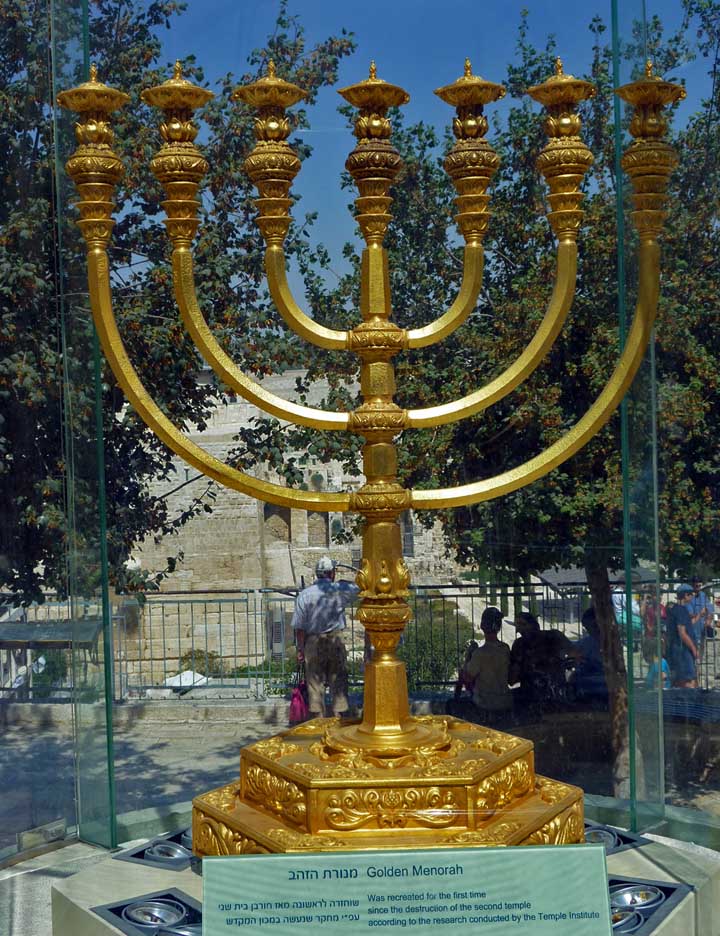
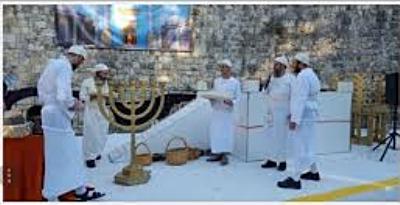

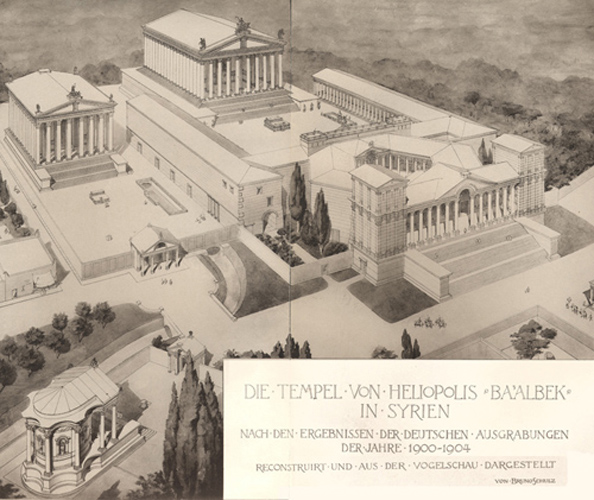
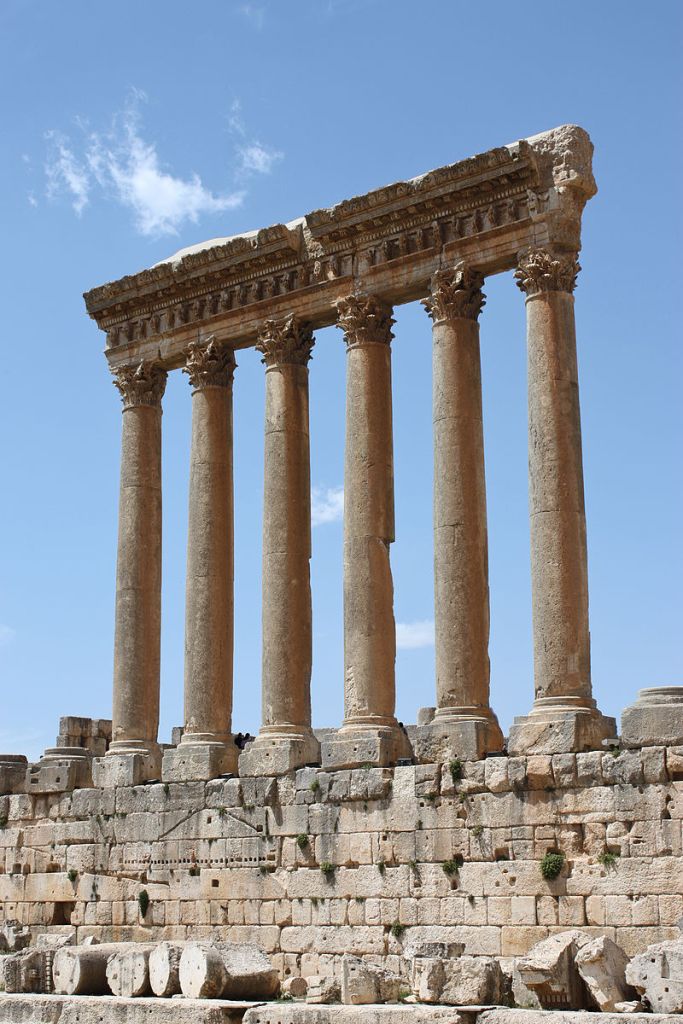
 Dan L. White Homeschool Helpers